Global Energy Sector on July 12, 2026: Brent and WTI Prices, Diesel Shortages, High Refining Margins, Europe and Asia's LNG Competition, Growing Electricity Demand, Renewable Energy Development, and the Return of Coal
The global fuel and energy complex enters a state of fragile equilibrium on Sunday, July 12, 2026. Oil no longer appears as the sole center of risk: Brent hovers around the mid-$70 per barrel mark, with WTI slightly above $70. The primary signal for investors, market participants in the fuel and energy sector, and oil companies now derives from the refined products segment. Diesel, gasoline, gasoil, refining margins, and logistics along key maritime routes are becoming more critical indicators than the crude oil price itself.
For the global energy market, this signifies a shift from the classical model of "oil price dictates all" to a more complex structure: while the raw material may seem relatively balanced, refining capacity shortages, disruptions in refined product supplies, LNG competition, rising electricity demand, and the resurgence of coal in Asia are creating a new wave of volatility.
Oil: Brent Stabilizes, but Geopolitical Premium Remains
The oil market concluded the week with heightened nervousness. Following sharp fluctuations linked to the tensions in the Middle East and the Strait of Hormuz, prices corrected on expectations of gradual normalization in shipping. Brent stabilized around $76 per barrel, while WTI rested near $71 per barrel. However, the weekly trend remained positive as investors continued to price in the risk of new disruptions.
Key factors influencing the oil market as of July 12, 2026, include:
- The restoration of supplies through the Strait of Hormuz reduces the insurance premium in oil prices;
- New increases in OPEC+ quotas from August add market expectations of rising supply;
- China and India remain the main variables in global demand;
- Strategic reserves and the release of reserves curb the sharp rise in Brent;
- Refined products are appreciating faster than crude oil due to refining capacity shortages.
For oil companies, the current situation is ambiguous. On one hand, Brent above $70 supports cash flows for producers; on the other, the volatility in freight rates, insurance, sanctions regimes, and refining makes profitability less predictable.
OPEC+: More Oil on Paper, but Market Focuses on Actual Barrels
OPEC+ has agreed to another increase in production targets by 188,000 barrels per day starting in August. Formally, this continues the cycle of supply recovery; however, the market is assessing not only the size of the quota but also the actual ability of participants to export additional volumes.
The key question for investors is whether the alliance can swiftly convert its decision into physical deliveries. The answer depends on three conditions:
- Stability in transporting oil from the Persian Gulf;
- Willingness of Asian buyers to increase purchases;
- Refineries' capacity to process additional volumes without exacerbating imbalances in refined products.
If OPEC+ deliveries recover faster than demand, oil may remain under pressure. Conversely, if geopolitical issues impact logistics once again, the market will quickly reassess risk premiums, giving Brent an upward impulse.
Refined Products and Refineries: Diesel Becomes the Main Indicator of Inflationary Pressure
The headline topic of the day is not crude oil, but refined products. The global diesel market is facing a severe supply shortage. Russia's ban on diesel fuel exports, disruptions at refineries, attacks on infrastructure, and low inventories in the U.S. and Europe have sharply intensified competition for available fuel parcels.
Diesel is crucial not only for transportation but also for industry, agriculture, mining, construction, backup power generation, and logistics. Therefore, rising diesel prices quickly translate into higher costs for goods and services.
For refineries, the situation presents a rare window of super-margin opportunity: crack spreads for diesel and gasoline have reached extremely high levels. However, this window comes with operational risks:
- Shortages of middle distillates;
- Increased unplanned downtime and repairs in refineries;
- Heightened government control over fuel prices;
- Redistribution of export flows among the U.S., Europe, Brazil, Turkey, Africa, and Asia.
For fuel companies and traders, this means that managing diesel, gasoline, and gasoil inventories has become a strategic task. The physical availability of fuel is currently more critical than the exchange price of oil.
Gas and LNG: Europe Competes with Asia for Flexible Supplies
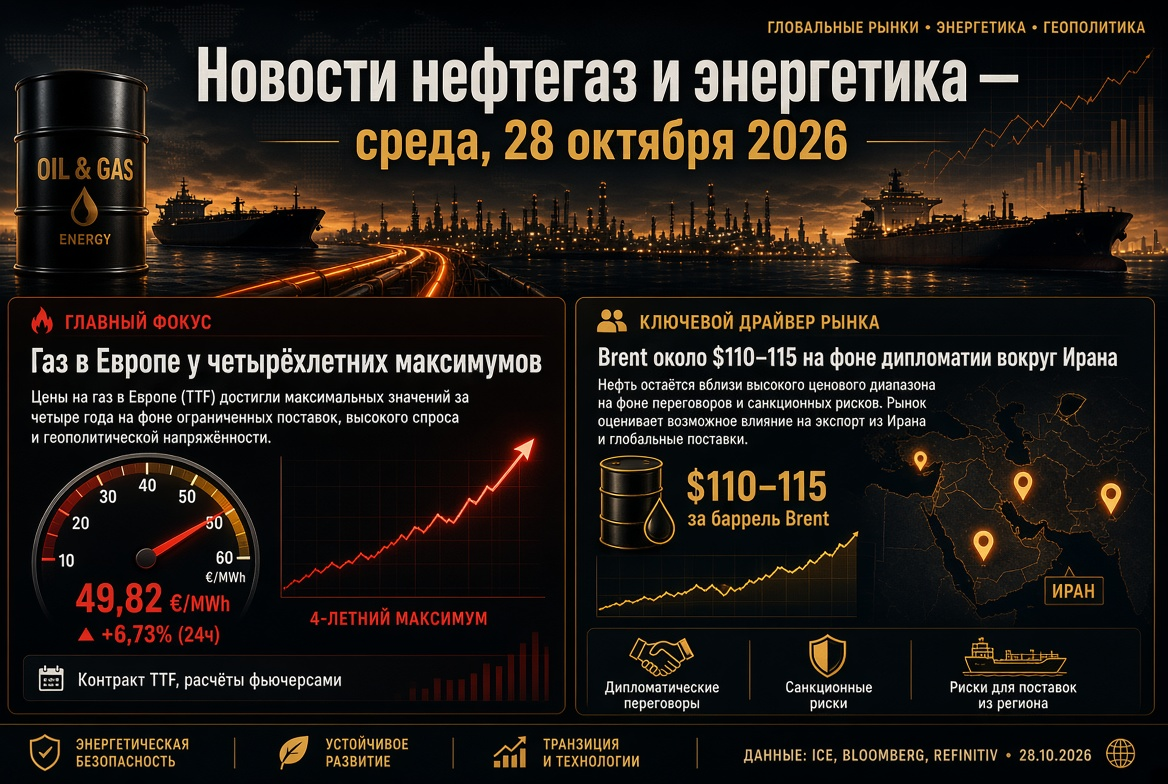
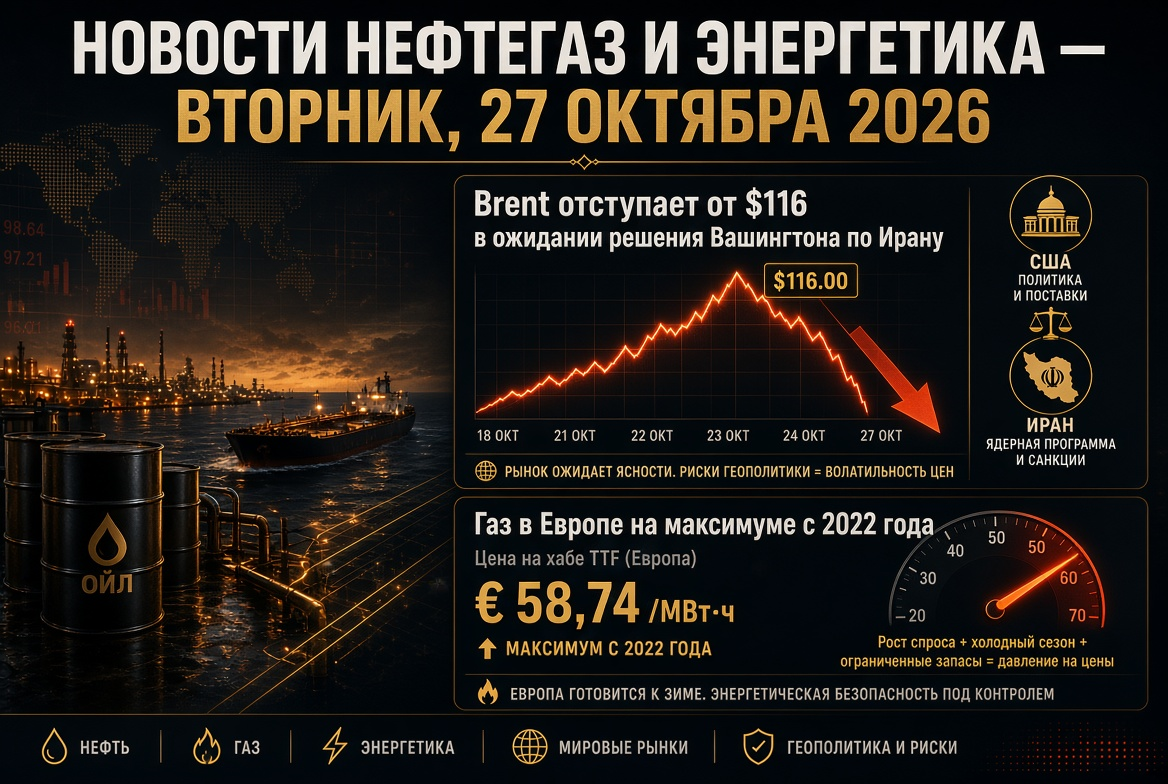
The gas market remains tense. The European TTF is trading around €49 per MWh, reflecting cautious optimism following a correction, but prices remain significantly higher than during calm pre-crisis periods. The primary risk lies not in the current price but rather in Europe's ability to fill storage ahead of winter amidst competition from Asia.
In June, less than half of U.S. LNG was sent to Europe for the first time in almost two years, with suppliers redirecting some shipments to more attractive markets in Asia and the Middle East. This is a significant signal for the global gas market: Europe can no longer assume that all flexible LNG will automatically head to its terminals.
Germany is simultaneously discussing the establishment of a strategic gas reserve of around 24 TWh. This highlights that energy security is once again becoming a priority in industrial policy. For gas companies, LNG suppliers, and energy traders, the coming months will be shaped not only by weather conditions but also by the competition for tankers, regasification capacities, and long-term contracts.
Electricity: Demand Rises Due to Heat, Data Centers, and Electrification
Electricity generation is becoming one of the main drivers of the global energy sector. In the U.S., a new record for electricity consumption is expected in 2026 and 2027 against a backdrop of rising data centers, artificial intelligence, and the electrification of industry and transportation. This is altering the investment model in the energy market, with generation, networks, transformers, and storage becoming strategic infrastructure assets.
The key issue is not just electricity production but also the delivery of power to consumers. In many regions, connecting large facilities to the grid is delayed due to equipment shortages, long queues for connections, and a lack of transformers.
For investors, this creates several areas of interest:
- Network companies and electricity transmission operators;
- Manufacturers of transformers, cables, and power equipment;
- Gas generation as a backup for data centers;
- Energy storage and flexible capacities;
- Renewable energy projects near large consumers.
Renewable Energy: Growth Continues, but Grid Capacity Becomes the Main Limitation
Renewable energy is experiencing structural growth. Solar energy, wind farms, battery systems, and low-carbon technologies remain at the forefront of the investment agenda. However, the main challenge for renewables in 2026 is not generation costs but the infrastructure for connection.
Solar and wind projects may prove economically attractive, but without networks, storage, and balancing capacity, they are not always capable of ensuring the reliability of energy systems. Consequently, investors are increasingly evaluating not just individual renewable energy projects but entire complexes: generation plus network, storage, consumer, and electricity supply contracts.
In Europe, renewables continue to displace fossil fuel generation, but during periods of low wind output and high demand, gas and coal plants remain a necessary reserve. In the U.S., reduced support for some wind and solar projects intensifies the dialogue regarding future electricity pricing and energy system resilience.
Coal: Asia Returns to Demand Despite Energy Transition
The coal market demonstrates that the global energy transition is progressing unevenly. In China, coal generation is set to rise again in 2026 after a previous decline. The reasons include heat, high air conditioning demand, industrial load, weak hydro generation, and the need to offset expensive gas.
In India, coal generation in June reached its highest levels since 2023. While the share of renewables in India's energy balance is also growing, evening demand peaks still require thermal generation due to insufficient storage.
For coal companies and energy coal suppliers, this indicates continued demand in Asia. For investors, it underscores the necessity to differentiate between the long-term trend of decarbonization and the short-term realities of energy systems where coal remains a reliability reserve.
What Matters to Investors and Energy Sector Market Participants
As of July 12, 2026, the global oil and gas and energy sectors are in a phase of risk reassessment. The crude oil market appears more balanced than a month ago, but bottlenecks in refining, diesel, LNG, and electricity create new points of tension.
Investors, fuel companies, oil companies, refineries, and energy market participants should pay attention to the following indicators:
- Brent and WTI — as indicators of geopolitical premium and demand expectations.
- Diesel crack spreads — as the primary signal of refined product shortages.
- Supplies through the Strait of Hormuz — a key factor for oil, gas, and LNG.
- Gas inventories in Europe — a measure of readiness for the winter season.
- Electricity demand — a structural driver for networks, generation, and renewables.
- Coal generation in China and India — an indicator of real load on Asian energy systems.
The main takeaway for a global audience: The energy market of 2026 is becoming a market constrained by infrastructure. Success will depend not solely on possessing oil, gas, or coal, but on controlling processing, logistics, networks, storage, LNG capacities, and access to end consumers.