News from the Oil, Gas, and Energy Sector — Monday, January 19, 2026: A New Phase of Sanction Pressure, Oil Surplus, and Record LNG Imports. Oil, gas, electricity, renewables, coal, oil products, refineries — key trends in the global energy sector for investors and market participants.
The start of 2026 is marked by the continuation of geopolitical confrontation and a large-scale restructuring of global energy resource flows, attracting attention from investors and market participants. Western countries are maintaining sanction pressure on Russia: the European Union is preparing a new package of energy sector restrictions in an effort to completely eliminate reliance on Russian oil and gas. At the same time, the global oil market is experiencing an oversupply — a slow growth in demand and the return of some producers (such as the gradual recovery of production in Iran and Venezuela) are keeping Brent prices near $60 per barrel. The European gas market is managing the winter peak in consumption thanks to record LNG imports and the diversification of supplies (including new volumes from Azerbaijan), which allows price increases to be restrained even amidst reductions in Russian pipeline exports. The global energy transition is gaining momentum: in 2025, record capacities of renewable energy were introduced, although traditional resources are still needed for the stable operation of energy systems. In Asia, demand for coal and hydrocarbons remains high, supporting the global raw materials market, while in Russia, after last year's surge in gasoline prices, the authorities are extending emergency restrictions on the export of oil products to maintain stability in the domestic fuel market. Below is a detailed overview of key events and trends in the oil, gas, energy, and raw materials sectors as of this date.
Oil Market: Supply Surplus Limits Price Growth
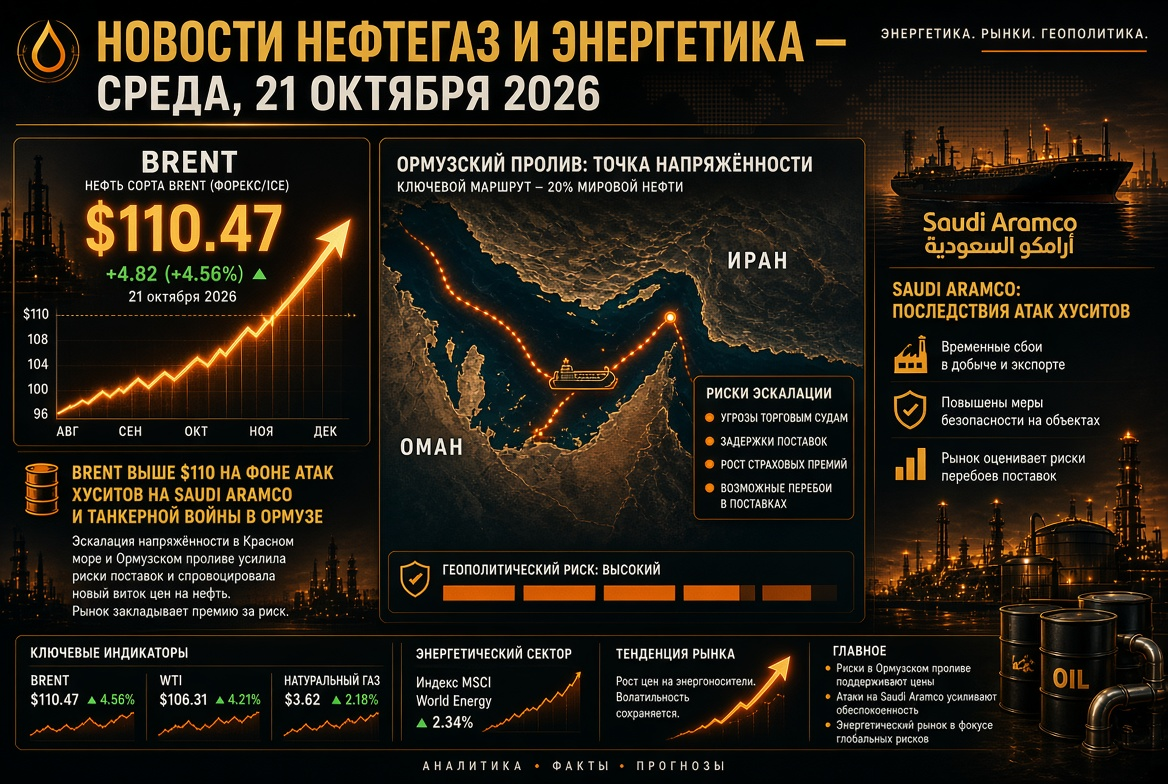
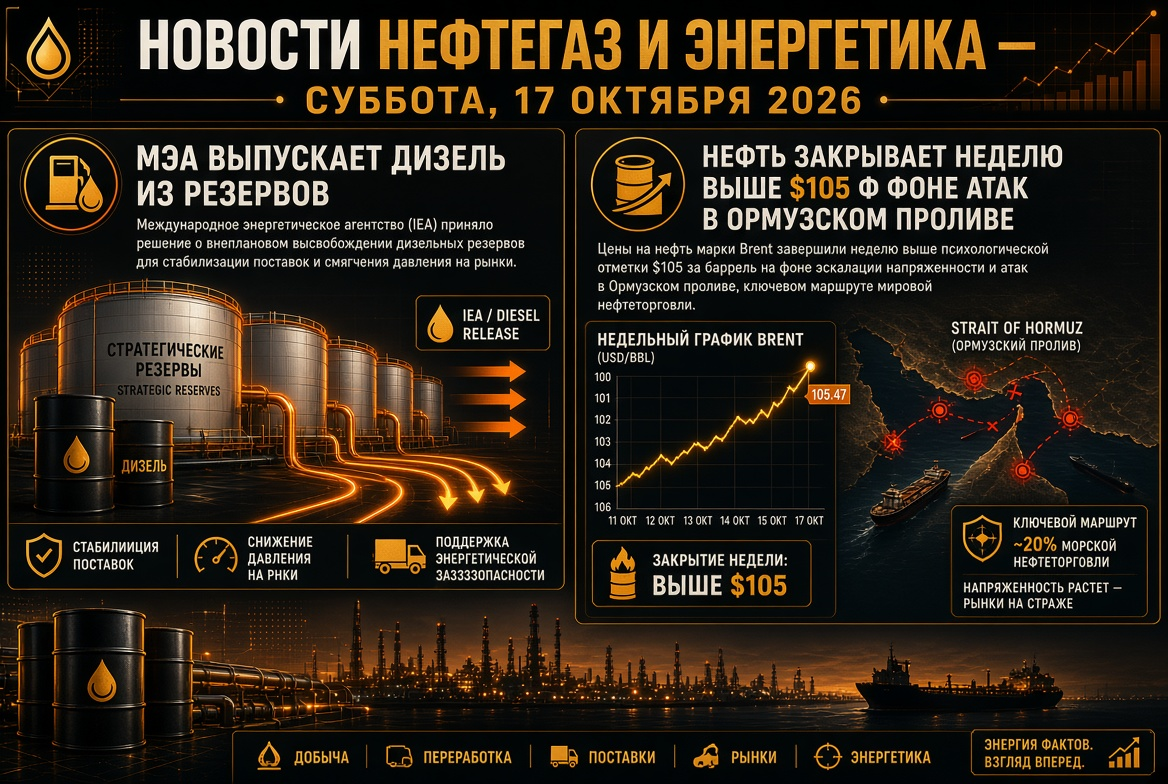
Global oil prices at the beginning of 2026 are held at a moderate level due to the continuing supply surplus. The benchmark Brent blend is trading around $60–65 per barrel, while US WTI is within the $55–60 range. These price levels are approximately 10–15% lower than a year ago, reflecting a gradual correction after the peaks of the 2022–2023 energy crisis. There is an oversupply of oil of about 2–2.5 million barrels per day, as OPEC+ countries increased production in the second half of 2025, seeking to regain lost market shares. The US has also boosted supply (shale oil production remains high), and volumes have partially returned from previously sanctioned countries — Iran and Venezuela have reported a rise in export capabilities following the easing of several restrictions. At the same time, growth in global demand remains subdued: an economic slowdown in China and energy-saving effects following a period of high prices limit oil consumption growth. Analysts estimate that without significant demand revival or new actions by producers, prices could fall to $55 per barrel in the first half of 2026. A key factor is OPEC+ policy: if the alliance does not cut production and continues on the previous course, prices will remain under pressure. Leading exporters are unlikely to allow a crash in the market and can limit supply again if necessary to support prices. Geopolitical risks are also present but have not yet led to supply disruptions: the recent easing of tensions in the Middle East quickly removed the "premium" from prices, and oil quotations soon returned to previous values. Thus, a situation close to equilibrium is forming in the oil market, but the balance has shifted in favor of buyers — oversupply and moderate demand prevent significant price increases.
Gas Market: Winter, LNG, and New Routes Replace Russian Supplies
The European gas market entered 2026 under radically new conditions — virtually without pipeline gas from Russia. Since January 1, the EU's ban on most of such supplies has come into force, and Europe had prepared for this step well in advance. EU countries filled underground gas storage (UGS) facilities to over 90% by the beginning of winter; by mid-January, stocks had decreased to around 55–60% of capacity, still above the average levels of previous years. Despite the severe cold, gas extraction from UGS is proceeding as planned, without panic, and exchange prices remain several times lower than the peaks of 2022.
The main reason for this stability is the record import of liquefied natural gas (LNG). European LNG terminals are operating at maximum capacity in January: daily regasification volumes exceed 480 million cubic meters, surpassing previous historical records. This influx of LNG compensates for the cessation of Russian transit and restrains the rise in gas prices. Although spot prices in Europe have risen by 30–40% since the beginning of the month due to the cold weather, they are still far from the extreme energy shortage values of 2022. To meet demand under restricted supplies from Russia, Europeans are relying on several directions:
- maximizing pipeline gas supplies from Norway and North Africa;
- increasing LNG imports from the US, Qatar, and other countries;
- expanding the use of the Southern Gas Corridor (supplies from Azerbaijan to EU countries);
- reducing domestic consumption through energy-saving measures and increasing energy efficiency.
The combination of these measures allows Europe to relatively confidently navigate the current heating season even without Russian gas. Additionally, Russia is redirecting exports eastward: Gazprom reported record daily gas deliveries to China via the Power of Siberia pipeline in January. As for the global market, seasonal increases in demand are also felt in Asia: key importers in Northeast Asia are ramping up LNG purchases, and the Asian JKM index has risen to ~$10 per MMBtu (a maximum in the last one and a half months). However, the global gas balance remains stable: flexible redistribution of flows between regions and increased production (including in the US, where Henry Hub prices hover around $3 per MMBtu) allow for the increased demand to be met. In the coming weeks, the situation in the gas market will primarily depend on the weather: even if the cold persists, Europe has enough gas reserves and import capabilities to avoid a supply crisis.
International Politics: Sanctions, New Deals, and Redistributed Flows
The sanction confrontation between Moscow and the West is evolving further in 2026. At the end of 2025, the EU approved the 19th package of measures, a significant part of which targeted the Russian energy sector — including a decision to lower the price ceiling for Russian oil starting February 2026 and accelerate the phase-out of LNG imports from Russia (prohibition on purchases starting in 2027). At the beginning of 2026, Brussels announced preparations for the next step: a legislative ban on the remaining volumes of Russian oil imports to EU countries is planned, as well as implementing an agreement reached to completely halt purchases of Russian pipeline gas. Meanwhile, the United States and the European Union are tightening control over compliance with existing restrictions: back in the fall, the US Treasury imposed additional sanctions on the oil companies Rosneft and Lukoil, while European authorities are intensifying oversight of the tanker fleet transporting Russian oil in circumvention of established rules. Russia, for its part, has extended the ban on oil sales to countries participating in the price ceiling until June 30, 2026.
The export of Russian oil and petroleum products remains at a relatively high level due to the redirection of flows to Asia. China, India, Turkey, and several other countries continue to purchase Russian hydrocarbons at significant discounts to global prices. As a result, the global energy market is effectively divided into two parallel contours: the "Western" one, where sanctions and restrictions are in place, and the alternative one, where Russian raw materials find outlets, albeit at reduced prices. Investors and traders are closely monitoring sanction policies, as any changes affect logistics and the price conditions of the markets.
At the same time, elements of flexibility have appeared in the West's sanction strategy regarding specific countries. As political changes occur in Caracas, the US signals its readiness to accelerate the easing of oil sanctions against Venezuela. International companies have already received expanded licenses to operate in Venezuela: in the coming months, Chevron and other operators will be able to significantly increase Venezuelan oil exports. Additionally, Venezuela has signed its first natural gas export contract in its history, opening a new chapter for its energy sector. Experts note that the recovery of Venezuela's oil and gas sector will be gradual — years of insufficient investments and sanctions have significantly reduced its production capacity. However, the mere fact of additional volumes returning to the market from Venezuela boosts consumer confidence and exerts downward pressure on price growth expectations. Geopolitical tensions in the Middle East have also noticeably decreased: by mid-January, unrest in Iran had subsided, and Washington's tough rhetoric regarding possible strikes against Iran had softened. As a result, the risks of sudden supply interruptions of Middle Eastern oil have temporarily decreased. Thus, the beginning of 2026 is characterized by the contradictory influence of politics on energy markets: on one hand, sanction pressure on Russia remains high, while on the other, local de-escalation in some regions and selective easing of restrictions (such as with Venezuela) create a more favorable backdrop than previously anticipated.
Asia: India and China Navigate Between Imports and Development
- India: Despite pressure from Western partners to reduce cooperation with sanctioned suppliers, New Delhi has only moderately decreased Russian oil and gas purchases in recent months. India deems a complete rejection of these resources impossible due to their critical role in national energy security. The country continues to receive raw materials from Russian companies on preferential terms: the discount on Urals oil for Indian buyers is around $4–5 to the Brent price, making supplies highly attractive. As a result, India remains one of the largest importers of Russian oil, while also increasing purchases of oil products (such as diesel fuel) to meet growing domestic demand. Simultaneously, the Indian government is intensifying efforts to reduce dependence on imports in the future. Prime Minister Narendra Modi has announced a large-scale program for exploring deep-water oil and gas fields on the shelf. The state company ONGC is already drilling ultra-deep wells in the Bay of Bengal and the Andaman Sea; early results are assessed as promising. This initiative aims to uncover new large hydrocarbon reserves and move India closer to the long-term goal of energy self-sufficiency.
- China: The largest economy in Asia continues to increase energy consumption, combining rising imports with increasing domestic production. Beijing has not joined Western sanctions against Moscow and has taken advantage of the situation to ramp up purchases of Russian energy carriers on favorable terms. Analysts estimate that in 2025, China’s crude oil and gas imports grew by 2–5% compared to the previous year, exceeding 210 million tons of oil and 250 billion cubic meters of gas, respectively. The growth rates have slowed somewhat compared to the spike in 2024 but remain positive. Meanwhile, China is setting records in domestic production: in 2025, national companies produced over 200 million tons of oil and approximately 220 billion cubic meters of natural gas, which is 1-6% more than the previous year's levels. The state actively invests in the development of hard-to-reach fields, the implementation of new technologies, and the increase of oil recovery from mature fields. However, given the scale of the Chinese economy, the dependence on imports remains significant: about 70% of the oil consumed and roughly 40% of the gas is still sourced from abroad. In the coming years, these proportions are unlikely to change significantly. Thus, the two largest Asian consumers — India and China — continue to play a crucial role in global commodity markets, navigating between the necessity to import vast volumes of fuel and the desire to develop their own resource bases.
Energy Transition: Renewable Energy Records and the Role of Traditional Generation
The global transition to clean energy reached new heights in 2025, establishing important benchmarks for the industry. Many countries introduced record capacities of solar and wind generation, leading to historical highs in output from renewable sources. In the European Union, by the end of the year, total generation from solar and wind power plants exceeded output from coal and gas-fired power plants for the first time, solidifying the shift in balance towards "green" energy. In countries such as Germany, Spain, and the UK, the share of renewables in electricity consumption regularly exceeded 50% on certain days due to new capacity installations. In the US, renewable energy also reached a record level: at the start of 2025, over 30% of total generation came from renewables, and the total volume of electricity generated from wind and solar surpassed that generated from coal plants for the year. China remains the world leader in the scale of "green" construction — in 2025, the country introduced dozens of gigawatts of new solar panels and wind turbines, constantly updating its own records for clean energy production. Considering these trends, leading oil, gas, and electricity corporations continue to diversify their businesses: significant investments are directed towards renewable energy projects, the development of hydrogen technologies, and energy storage systems.
However, the impressive progress in clean energy requires maintaining a balance with traditional generation. The past year demonstrated that, during peak demand periods or adverse weather conditions (for example, during the winter when wind is calm and solar generation is low), backup capacities using fossil fuels remain critically important for ensuring reliable energy supply. In Europe, having significantly reduced the share of coal in recent years, some coal plants were reluctantly brought back online during severe cold spells, while gas-fired power plants handled increased loads when wind generation was insufficient. In Asian countries, maintaining a base load from coal generation safeguards energy systems from disruptions during periods of consumption peaks. As a result, while the world is rapidly moving towards cleaner energy, it remains far from complete carbon neutrality. The transitional period is characterized by the coexistence of two models — rapidly growing renewable and traditional thermal generation, which provide backup and smooth seasonal and weather fluctuations. The strategy of many countries involves the simultaneous development of renewables and the modernization of classical infrastructure, which should ensure the resilience of energy systems on the path to a low-carbon future.
Coal: Asian Demand Supports the Market at a High Level
Despite efforts towards decarbonization, the global coal market is still characterized by significant consumption volumes and relatively stable prices. Demand for coal remains high, especially in Asian countries. In China and India — the two largest consumers — this resource continues to play a key role in electricity generation and metallurgy. According to industry reports, global coal consumption in 2025 remained near historical highs, decreasing only by 1–2% compared to the record levels of 2024. Increased coal use in developing economies compensates for its declining share in the energy balance of Europe and North America. Many Asian countries continue to launch new high-efficiency coal-fired power plants in order to meet the growing electricity demand from both the population and industries.
The current pricing situation in the coal market is calmer than during the peak of the energy crisis: thermal coal prices at the beginning of 2026 are in the range of about $100–110 per ton, significantly lower than the peaks two years ago. The rise in supply from leading exporters (Indonesia, Australia, South Africa, Russia, etc.) has contributed to price stability, while consumption in Europe is decreasing as renewables develop and nuclear generation returns to operation. Europe continues its planned phase-out of coal: a landmark event was the closure in January of the last deep coal mine in the Czech Republic, marking the end of 250 years of coal mining history in that country. Nevertheless, on a global level, coal still remains an essential component of the energy balance. The International Energy Agency predicts that global coal demand will plateau in the coming years, followed by a gradual decline. In the long term, tightening environmental policies and competition from cheaper renewable sources will limit the development of the coal sector; however, in the short term, the coal market will continue to rely on stable and strong Asian demand.
The Russian Market: Export Restrictions and Stabilization of Fuel Prices
Within the Russian fuel and energy complex, unprecedented measures continue to be in place to normalize price conditions. After wholesale prices for gasoline and diesel skyrocketed to record levels in August 2025, the Russian government imposed a temporary ban on the export of major oil products. These restrictions have been repeatedly extended and are now in effect at least until February 28, 2026, covering the export of gasoline, diesel fuel, fuel oil, and gas oils. The cessation of exports has allowed significant volumes of fuel to be redirected to the domestic market, which noticeably reduced exchange prices by winter. Wholesale prices for petroleum products have dropped significantly from peak values, while the growth in retail prices at gas stations has slowed — by the end of the year, it stood at about 5%, fitting within the overall inflation framework. In this way, the fuel crisis has largely been mitigated: there is no gasoline shortage at gas stations, frantic demand has subsided, and prices for end consumers have stabilized.
However, the cost of these measures has been a reduction in export revenue for oil companies and the budget. Russian oil producers have to cope with lost profits in order to saturate the domestic market. Authorities claim that the situation is under control: the production costs at most Russian fields are low, so even at Urals prices below $40 per barrel, the main projects remain profitable. Nevertheless, the decline in export revenues — with oil and gas revenues to the Russian budget dropping by about a quarter compared to the previous year in 2025 — poses risks for the launch of new investment projects, which require higher global prices and access to external markets. The state does not provide direct compensation to companies but continues to implement the damping mechanism (reverse excise tax), partially reimbursing lost revenues from domestic fuel sales.
The Russian energy sector is adapting to the new conditions of the sanction era. The main task for 2026 is to maintain a balance between controlling domestic energy prices and preserving export revenues, vital for budget replenishment and financing the development of the sector. The government emphasizes that it is ready to extend restrictions on exports of oil products or introduce new tools, if necessary, to prevent shortages and price shocks for consumers. Meanwhile, measures to stimulate refining and find new markets for raw materials are under consideration. So far, the steps taken allow for ensuring a stable fuel supply within the country and keeping prices at an acceptable level for consumers. Monitoring the situation in the fuel sector remains a priority of state policy, as social and economic stability and the resilience of Russia's oil and gas complex in the face of external pressure depend on it.