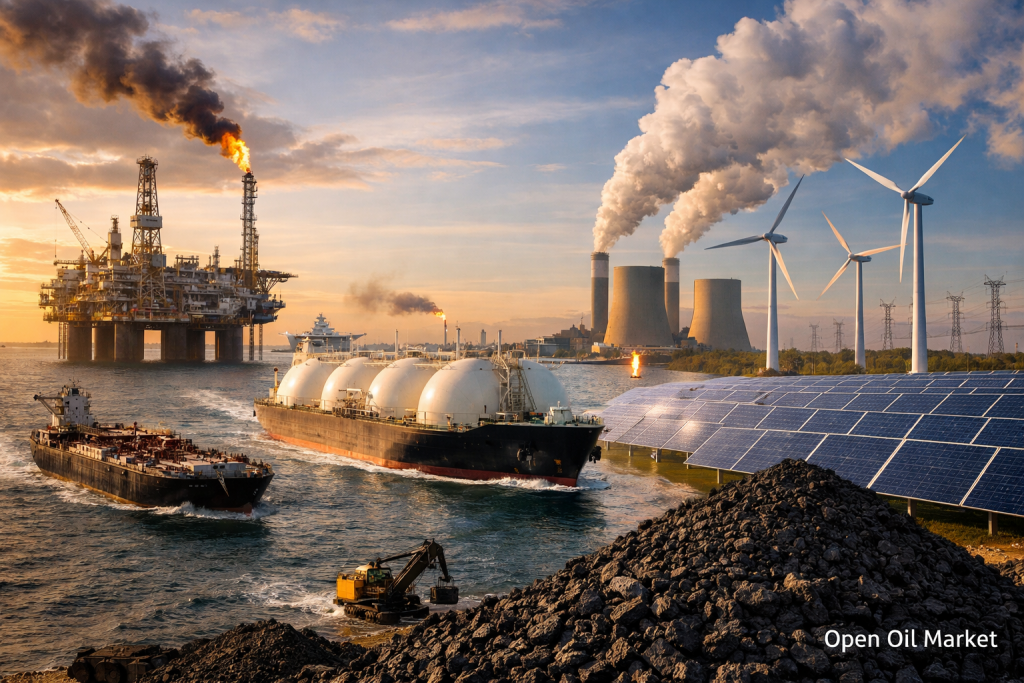
Current News in Oil, Gas, and Energy as of April 6, 2026, Including Oil, Gas, LNG, Refineries, Electricity, and Global Trends in the Energy Sector
The main narrative at the beginning of the week for the oil, gas, and energy sectors is the divergence between formal producer decisions and the actual state of supplies. Even though OPEC+ signals a willingness to increase production, the oil market primarily assesses the availability of real barrels, the condition of export infrastructure, and the resilience of maritime logistics.
Currently, the following circumstances are crucial for the global oil market:
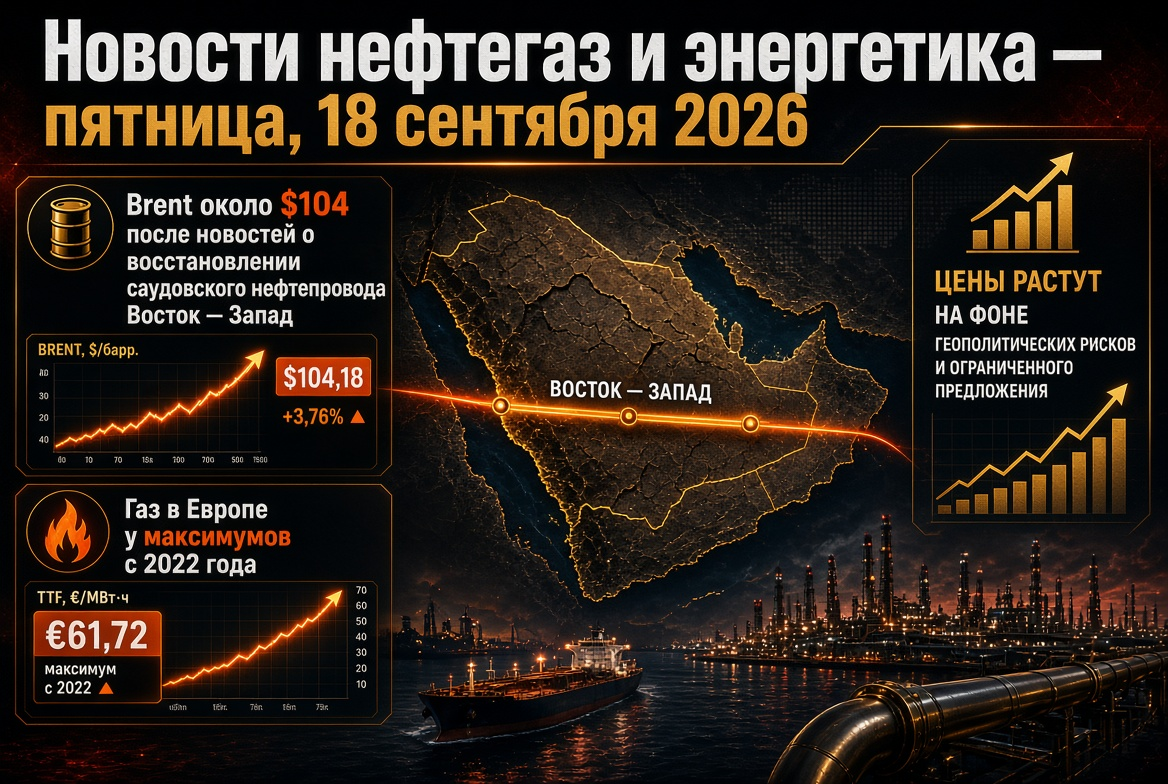
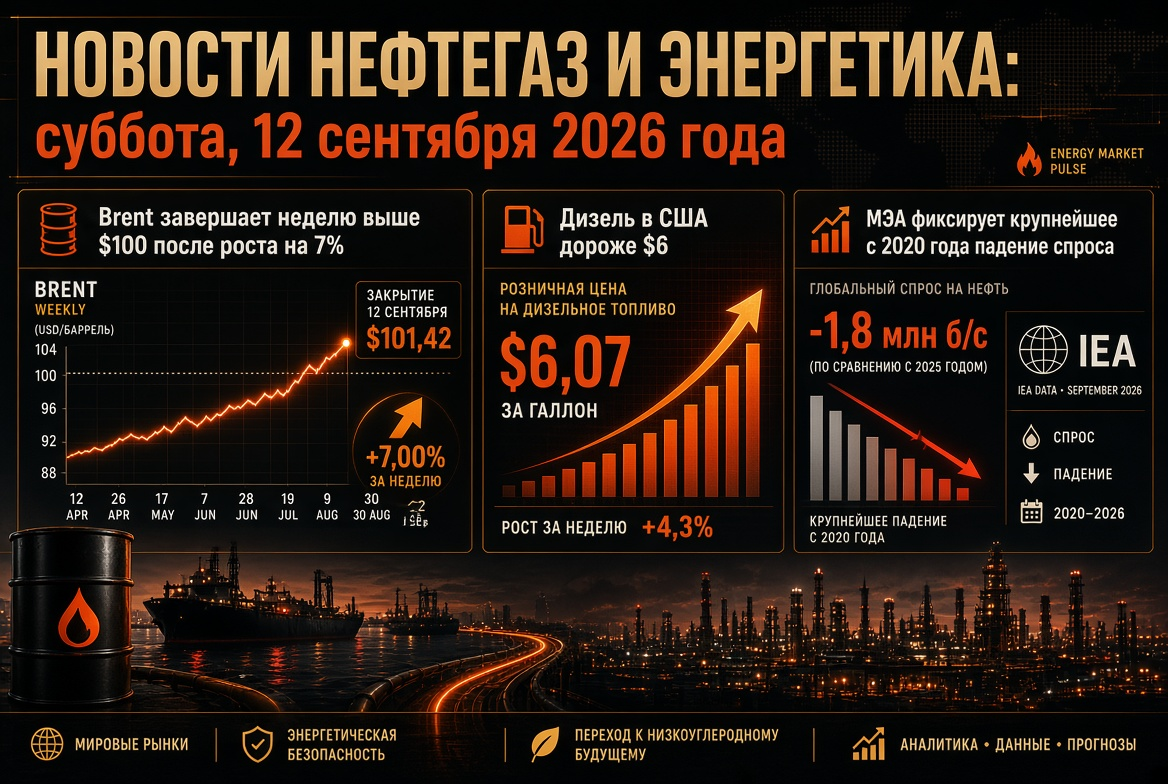
- an increase in the geopolitical premium in the prices of Brent and WTI;
- limited ability to rapidly increase supplies from the Persian Gulf region;
- heightened market sensitivity to any attacks on production sites, refineries, and terminals;
- the risk of prolonged periods of high petroleum product prices even with stabilization in crude oil prices.
For investors, this means a simple reality: the oil market is once again perceived not as a market of oversupply but as a market potentially facing supply shocks. For oil companies, this creates a window of high prices while simultaneously raising operational and logistical risks.
Gas and LNG: Shortages Become Global Rather Than Regional
The gas and LNG segment remains the second most significant driver for the global energy sector. While many anticipated a more comfortable balance in liquefied natural gas in 2025, by April 2026, the scenario has changed significantly. Damage to parts of the export infrastructure in Qatar and the overall instability of transportation through the Middle East have sharply increased tension in the supply chain.
This is particularly important for the global market as LNG affects multiple directions:
- the price of gas in Europe and Asia;
- the cost of electricity in countries with a high share of gas generation;
- industrial competitiveness;
- coal demand as a substitute fuel;
- the margins of gas and oil companies with strong export profiles.
For the gas market, this week is significant as expensive LNG is no longer a short-term spike. More participants in the energy sector are beginning to factor in models that anticipate a prolonged period of high gas prices, limited flexible supplies, and intensified competition between Europe and Asia.
Refineries and Petroleum Products: Refining Emerges as One of the Main Beneficiaries of the Crisis
Against the backdrop of tension in the raw materials sector, refining is once again in the spotlight. Refineries benefit from a sharp increase in margins for diesel, jet fuel, and gasoline, but only in regions where stable access to raw materials exists, and where there are no critical logistical constraints.
Current Developments in the Petroleum Products Segment
- refining margins in Asia remain elevated;
- the diesel market appears particularly tight;
- Europe increasingly relies on external supplies of motor fuel and distillates;
- the reduction of export activity by certain Asian players supports high prices;
- refineries with flexible configurations gain a strategic advantage.
For fuel companies and participants in the petroleum products market, this indicates a shift in focus from the simple question of "where is oil going" to the more practical question of "who can ensure stable fuel output and in what volumes." For energy sector investors, this amplifies interest in refining, storage infrastructure, and trading platforms for distillates.
Electricity: The Energy System Enters a Phase of New Competition for Capacity
The global electricity market increasingly depends not only on weather and fuel but also on the structural growth of demand from the digital economy. The rapid development of data centers, artificial intelligence, and energy-intensive digital infrastructure is shaping a new contour of demand for generation.
For the energy sector, this creates a dual effect:
- the acceleration of long-term electricity supply agreements;
- an increase in interest in new gas capacities as a quick solution to reliability issues;
- renewable energy sources gain traction as a source of corporate power supply;
- the network infrastructure requires accelerated modernization.
As a result, the electricity market becomes more investment-intensive. Generation, networks, energy storage, and large renewable energy projects are no longer merely environmental stories—they now represent crucial factors for industrial growth, digital resilience, and energy security.
Renewables: Renewable Energy Continues to Grow, but Within a Different Framework
The renewables sector maintains a high pace of expansion, yet in 2026, the focus has shifted. Previously, the market mostly discussed climate agendas; now, solar and wind energy are increasingly regarded as elements of sovereign and corporate energy security.
For the global market, this has several consequences:
- solar generation remains the fastest-growing segment of new capacity;
- corporate electricity buyers are actively signing PPA contracts;
- the cost of capital and network constraints become just as critical as renewable capacities;
- the market increasingly combines renewables, gas, and storage into a unified supply model.
For investors, this means that the most interesting opportunities lie not just in individual renewable projects but in integrated energy platforms that combine generation, energy storage, balancing, and long-term contracts with consumers.
Coal: The Old Reserve of Global Energy Is Once Again in Demand
Amidst high gas prices and LNG restrictions, coal is again receiving tactical support. Although the long-term trend for coal generation remains restrained, many energy systems are not ready to fully abandon this fuel in the short term. This is particularly relevant for Asia, where coal continues to serve as a backup resource for electricity production and industry.
An important takeaway for the market is that coal does not become the new leader in the energy transition but maintains its role as a buffer in times of stress. For countries reliant on gas imports, this is a temporary yet economically sensible solution.
Politics and Regulation: Governments Shift to Crisis Management Mode
The rise in prices for oil, gas, electricity, and petroleum products is already eliciting responses from governments. Various markets are discussing tax relief, margin restrictions, engagement with reserves, targeted consumer support, and even a return to crisis management tools familiar from previous energy shocks.
What the Market Should Watch in the Coming Days
- whether measures to support fuel and electricity are expanded in Europe;
- whether additional signals regarding the real growth of oil production will emerge;
- whether the LNG shortage will persist in the second quarter;
- whether governments will actively use strategic reserves;
- how quickly the energy shock will translate into inflationary pressure on the global economy.
For participants in the energy sector, this signifies that the regulatory agenda becomes just as important as commodity quotes. For oil companies, refineries, and the electricity sector, this is a time when price factors are directly influenced by political decisions.
What This Means for Investors and Participants in the Global Energy Market
As of April 6, 2026, the global energy sector enters a phase where the significance of raw material risk, the premium for infrastructure resilience, and the value of flexible supply chains are all on the rise. Oil, gas, LNG, petroleum products, electricity, renewables, and coal can no longer be analyzed in isolation: the market once again operates as a unified system, where disruptions in one segment quickly impact all others.
Key takeaways for the global audience of investors and energy sector participants include:
- the oil market remains in a state of acute geopolitical reassessment;
- gas and LNG create a prolonged tail of high prices for energy and industry;
- refineries and the petroleum products market receive strong support through margin growth;
- electricity becomes a central asset of the new industrial era;
- renewables strengthen their positions, but increasingly in conjunction with gas, networks, and storage;
- coal temporarily maintains its importance as a backup resource for energy security.
Thus, news in oil, gas, and energy at the beginning of a new week is no longer just a review of quotes; it is an indicator of how robust the global fuel supply, generation, and refining system will prove to be in the coming months. The global energy market is entering a period in which not only resource owners will benefit but also those who control logistics, refining, generation, and access to end consumers.