Oil Market: Brent Returns Above $85 per Barrel
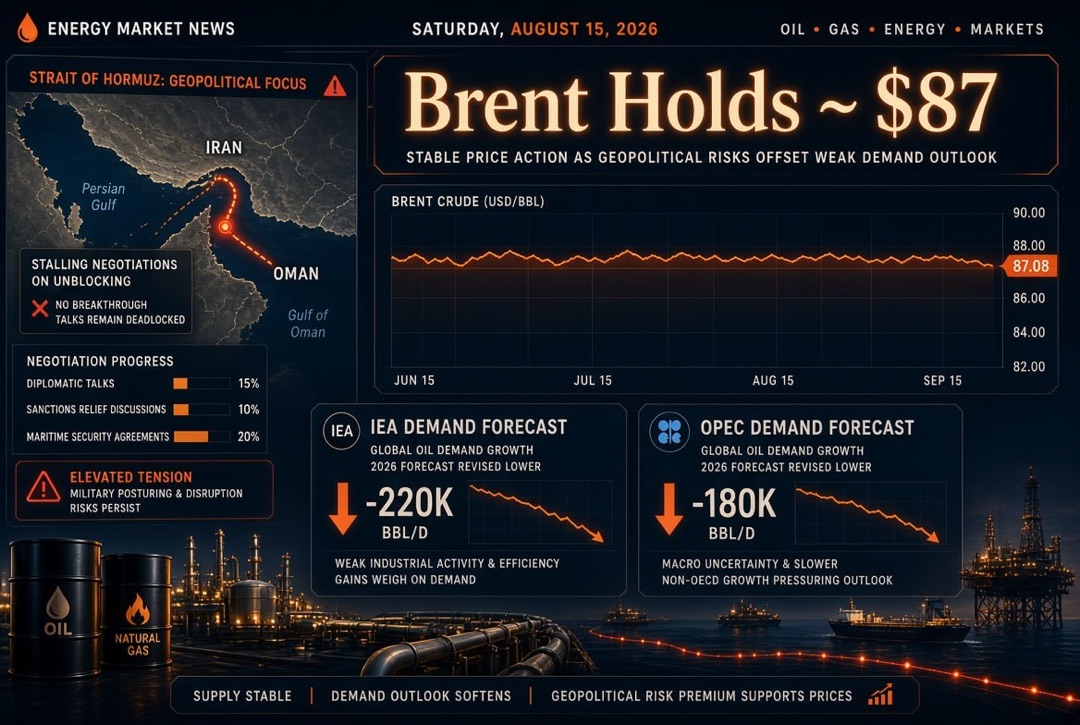
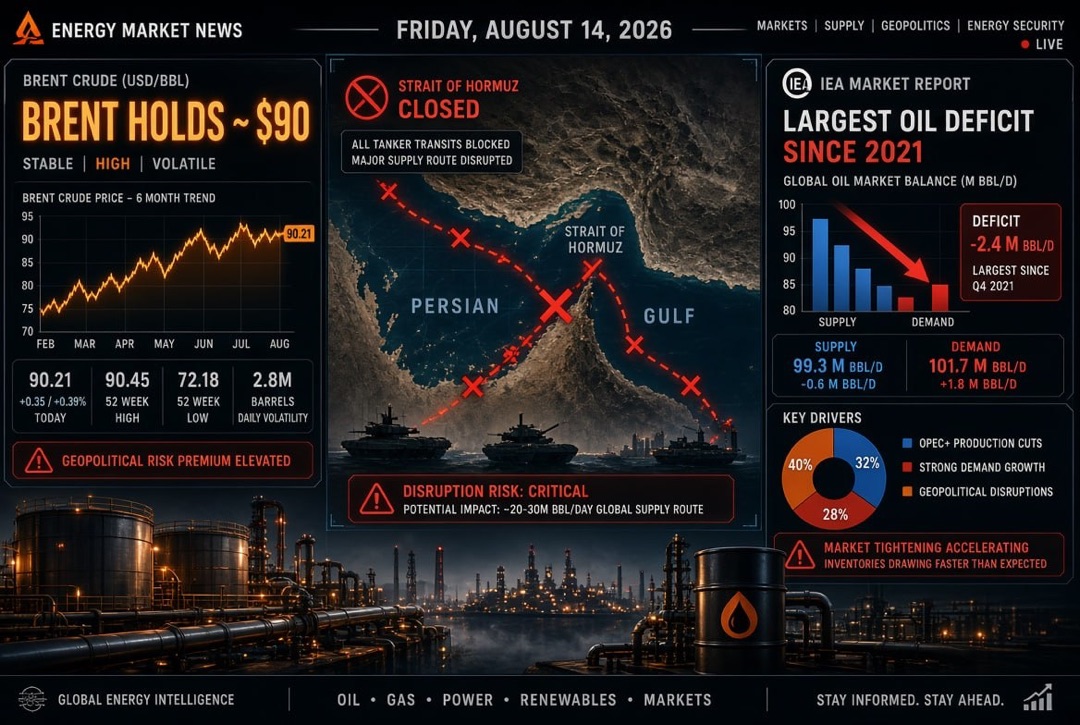
Oil prices are starting the week with a solid rise. On Monday, the October Brent futures on the ICE exchange climbed above $85 per barrel (+3.2% for the session), while the American WTI was trading around $79.5–79.8, and the Russian Urals was hovering near $79. The driver of this increase was heightened uncertainty regarding the reopening of the Hormuz Strait: the market, which was pricing in a quick de-escalation and falling prices just a week ago, is now forced to reinstate the "geopolitical premium" in quotes.
Key pricing factors in the oil market at the moment include:
- The Hormuz Factor: under normal conditions, the Strait handles about one-fifth of global oil supplies and significant volumes of liquefied natural gas (LNG). The partial blockade that has been in place since the end of February remains the main source of volatility.
- OPEC+ Supply: the alliance will end voluntary cuts in September, adding another 188,000 barrels per day to the market.
- Macroeconomics: weak employment data in the US has heightened expectations for a looser Fed policy, which supports commodity assets while simultaneously signaling demand risks for fuel.
Analysts note that if a comprehensive deal regarding the Strait is reached, Brent could quickly adjust to the $70–75 range, while the failure of negotiations could push prices back to spring peaks above $90.
The Hormuz Strait: Deal in Sight, but Tehran Raises Stakes
The diplomatic process surrounding the world's main oil artery has reached a crucial stage. Iran and Oman have agreed on a unified corridor for vessel movement and, according to statements from the Iranian Foreign Ministry, are finalizing the establishment of a joint maritime management mechanism. Washington, for its part, is prepared to lift the blockade on Iranian ports once an agreement is reached, and the US President previously canceled military strikes to facilitate negotiations.
However, over the past weekend, Tehran sharply hardened its stance, conditioning the reopening of the Strait on the fulfillment of several demands:
- lifting sanctions against the Iranian economy;
- payment of compensation for damages caused during the conflict;
- the US refraining from interfering in regional negotiation formats.
The outcome of these negotiations is a central event for the global oil and gas market in the coming weeks: it will influence freight rates, insurance premiums, supply routes for Middle Eastern oil and LNG to Asia and Europe, as well as the price trajectory for energy carriers through the end of the year.
OPEC+: Final Step in the Production Increase Cycle
Seven OPEC+ countries — Saudi Arabia, Russia, Iraq, Kuwait, Kazakhstan, Algeria, and Oman — have agreed to increase quotas in September by 188,000 barrels per day, repeating the parameters of the previous three months. This decision effectively concludes the rollback of voluntary cuts amounting to 1.65 million barrels per day that have been in place since 2023. After September, any further increase in production is expected to be paused until the end of 2026; restrictions of about 2 million barrels per day from 2022 will remain in effect. The next ministerial meeting is scheduled for September 6. For the market, this means that the supply factor from OPEC+ will be predictable in the coming months, shifting the focus to geopolitics and demand dynamics.
Gas Market: Europe Enters Heating Season with Record-Low Stocks
The situation in the European gas market remains the most concerning in recent years. According to Gas Infrastructure Europe's data, EU storage fill levels are around 58.8% — the lowest observed at the beginning of August in 15 years, and 16.5 percentage points below the five-year average. Storage facilities hold about 62–64 billion cubic meters of gas — almost 14 billion cubic meters less than a year ago.
Reasons for the existing deficit include:
- Abnormal Heat: in July, Europe withdrew around 1 billion cubic meters of gas from storage for cooling and electricity generation — a record summer draw since 2022;
- Declining LNG Imports: August imports of liquefied gas are estimated at about 6.4 million tons — 14% lower than last year, partly due to supply restrictions from the Middle East;
- High Prices: quotes at the TTF hub remain at multi-month highs (around $690 per thousand cubic meters), making injection economically painful.
The European Union has already lowered its target storage fill level for the beginning of the heating season from 90% to 80%, but to reach even this target, injection rates must significantly increase. Europe's gas balance for the winter of 2026–2027 will critically depend on weather, competition with Asia for LNG, and the situation in the Hormuz Strait, through which Qatari LNG flows.
Russian Fuel Market: Export Ban as a New Norm
The domestic fuel market in Russia continues to operate under strict regulation. The government has extended the ban on gasoline exports until January 31, 2027 — the restriction applies to both producers and traders. The ban on diesel fuel exports is active until August 31, 2026; however, from September 1, diesel fuel, marine fuel, and gasoil exported by direct producers will be exempt from restrictions.
Stabilization measures for the fuel market include:
- prioritizing saturation of the domestic market in the wake of unplanned refinery outages following drone attacks and maintenance;
- a temporary order for guaranteed supplies of gasoline and diesel to agricultural producers during the harvesting campaign — agreements between the Ministry of Energy, Ministry of Agriculture, regions, and oil companies remain in effect until November 1;
- tax amendments and a damping mechanism that encourage refining and retention of fuel within the country;
- allowing the use of straight-run gasoline mixtures in the production of high-octane fuel.
For the global market for petroleum products, the withdrawal of Russian gasoline and part of diesel volumes from export markets implies a tighter balance and support for crack spreads, especially in the Mediterranean, Africa, and Latin America.
Asia: India and China Strengthen Role of Anchor Buyers
Asian consumers remain the main attraction for commodity flows. Russian oil exports to India increased in July, supported by price discounts and a restructuring of logistics amid the Middle East crisis. China is ramping up purchases of pipeline gas and continues to balance its imports with domestic production, increasing its hydrocarbon output. Slowing inflation in China, as oil shock eases, indicates the gradual adaptation of the world's second-largest economy to new price realities. The competition between Asia and Europe for available LNG volumes will be a key intrigue this coming winter.
Electricity: AI and Data Centers Reshape Demand
A structural theme in global energy remains the explosive growth in energy consumption from data centers. Artificial intelligence is turning electricity into a strategic resource: energy companies in the US and Asia are launching new gas plants and extending the lifespan of coal units to cover the base load of data centers. In Russia, plans are being developed to place data centers in energy-abundant regions with gas, coal, and nuclear generation, as well as near Siberian hydropower plants. Investors are increasingly viewing electricity as a "second derivative" of the AI boom — from network companies to turbine and energy storage manufacturers.
Renewables and Energy Transition: Growth Continues, but Balance Becomes More Complex
Renewable energy maintains high capacity installation rates: solar and wind generation are breaking records in China, Europe, and the US, while Central Asia's renewable energy production is increasing by more than 20% year-on-year. However, energy systems increasingly feel the need for flexible capacities and energy storage: the hot summer of 2026 showed that peak demand for cooling and data center needs cannot yet be met without traditional generation. The investment focus is shifting from simply increasing "green" megawatts to energy storage systems, smart grids, and hybrid projects.
Coal: Eastern Vector and Support from Energy Deficit
The coal market is being supported from two sides: stable demand in Asia and a new factor — energy supply for data centers. The loading of Russian coal to the east is reaching record levels — over 10 million tons per month, reflecting a reorientation of exports towards Asia-Pacific markets. In India and Southeast Asia, coal generation remains the backbone of the energy balance, while high gas prices in Europe uphold coal's competitiveness in the global electricity market, despite climate concerns.
Outlook: What Market Participants Should Watch on August 11
Key benchmarks for the day for investors and energy sector companies include:
- Negotiations on the Hormuz Strait — any statements from Tehran, Muscat, and Washington will be promptly reflected in Brent, WTI quotes, and freight rates;
- Gas injection dynamics in European storage facilities and prices at the TTF hub — an indicator of the region's preparedness for winter;
- US oil stock statistics and signals from the Fed regarding the trajectory of rates;
- Situation in the Russian fuel market — exchange prices for gasoline and diesel amidst export bans;
- Corporate news from energy companies related to projects under AI infrastructure.
The base scenario for the upcoming sessions shows Brent maintaining within the $80–87 per barrel corridor amid increased volatility: the oil, gas, and electricity markets continue to operate in the rhythm of diplomacy around the Persian Gulf and the preparation of the Northern Hemisphere for an atypical winter.