Global Oil and Gas Market and Energy — Thursday, April 16, 2026: The Oil Market Between Geopolitical Premiums, European Refinery Weakness, and the New Energy Transition
As of April 16, 2026, the global fuel and energy complex is experiencing heightened uncertainty. Oil maintains a significant geopolitical premium, while gas and LNG remain sensitive to logistical constraints. Meanwhile, electricity and renewable energy sources (RES) are rapidly transitioning from a long-term transformation category to tools for current energy security. For investors, oil companies, refineries, gas market participants, and the electricity and coal sectors, this implies one thing: the energy market is increasingly less driven by inertia and more dependent on operational adaptability to the changing supply configuration.
The main theme of the day is not just expensive oil, but how the high commodity market begins to redistribute margins across the entire chain: from upstream and exports to refining, petroleum products, electricity, and industrial demand.
Oil Market: High Prices Persist, but Balance is Becoming Increasingly Fragile
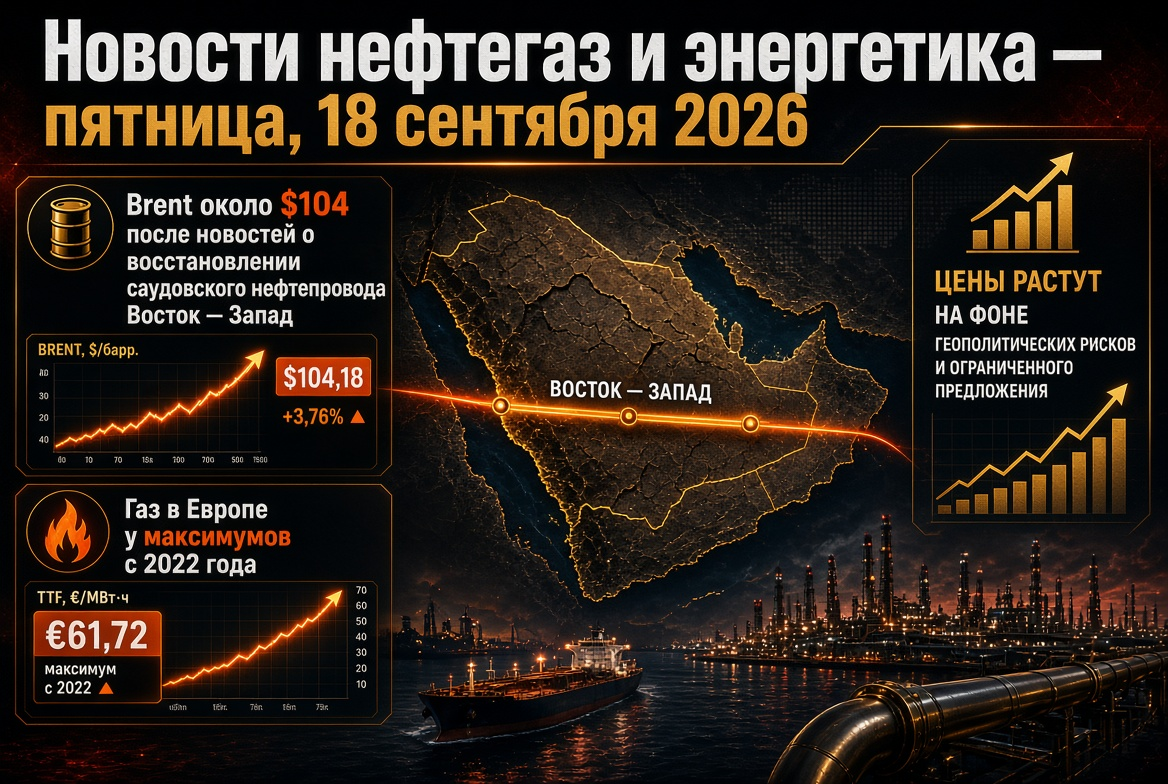
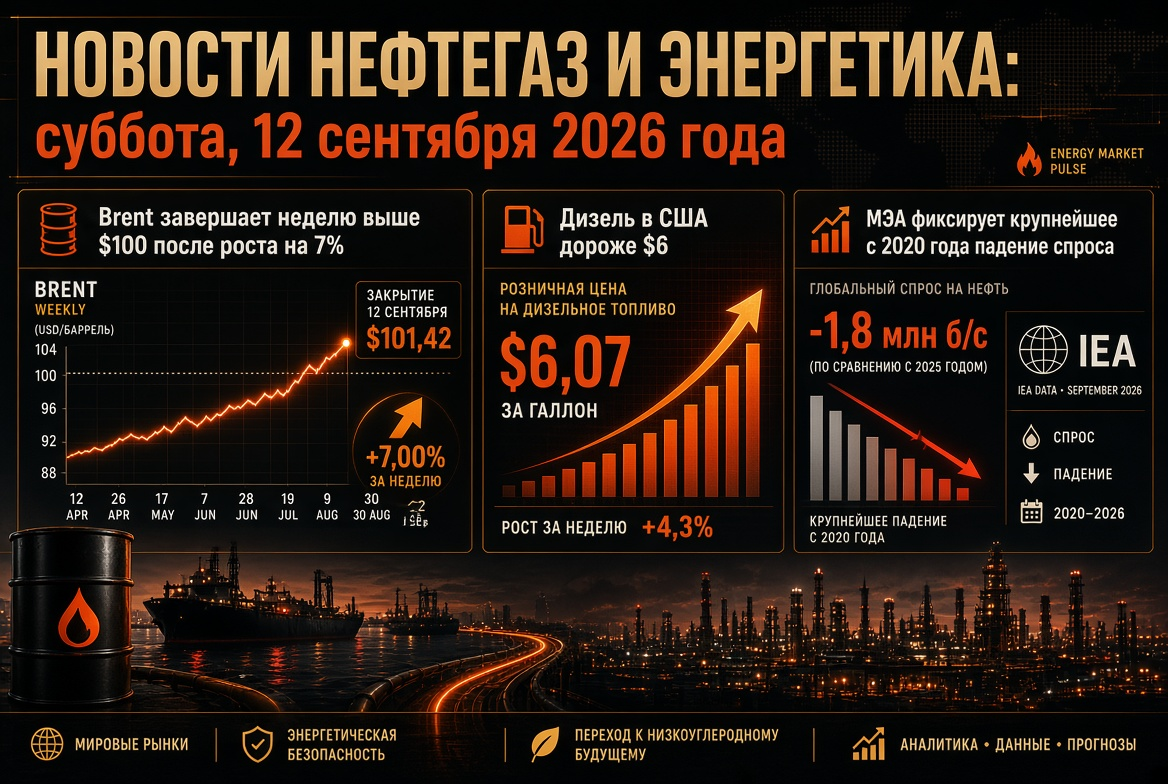
The oil market remains highly volatile. For Brent, the key factor is not so much the formal production volume, but the real capacity of export routes and the resilience of supplies through critical maritime hubs. This maintains the risk premium even during moments when market participants begin to factor in the possibility of partial diplomatic easing.
Several key takeaways are important for the oil market now:
- The cost of a barrel remains sensitive to any changes in logistics and shipping;
- The long-term forecast is becoming less linear than at the beginning of the year;
- Volatility increases interest in shares of large oil and gas companies with strong cash flow;
- The price premium redistributes profitability among production, refining, and trading.
Therefore, oil and gas and energy in April 2026 is no longer just a story about oil prices. It is a story about the resilience of export infrastructure, insurance risks, raw material availability, and the manageability of petroleum product supplies.
OPEC+: Formally Adding Barrels, but Cautiously Betting on Stability
OPEC+ countries maintain a cautious approach. Formally, the alliance continues its gradual adjustment of production restrictions; however, the main message to the market is not in the nominal increase in quotas, but in the readiness to swiftly halt or reverse the process should the situation deteriorate. This indicates that OPEC+ is trying to avoid a sharp imbalance and is acting more as a stabilizer of expectations.
This is crucial for the oil market for three reasons:
- Additional volumes do not guarantee physical market saturation if logistical disruptions persist;
- Producing countries are demonstrating flexibility rather than a rigid adherence to old production increase scenarios;
- The oil market continues to trade not only on the fundamentals of supply and demand but also on the likelihood of new disruptions.
Thus, even with formal OPEC+ decisions, the energy market continues to operate under a regime of managed confidence deficit. For investors, this means maintaining interest in large integrated companies capable of profiting simultaneously from production, trading, and optimizing flows.
Refineries and Oil Products: European Refining Under Pressure
One of the key issues for the energy sector is refining. European refineries are facing margin deterioration amid expensive raw materials. The rise in oil prices is outpacing the increase in prices for certain petroleum products, while additional energy and gas costs exacerbate pressure on refiners. This is particularly sensitive for simple and medium-complexity refineries.
The oil products market remains heterogeneous:
- Middle distillates and aviation fuel retain strategic importance;
- European refining appears weaker than specific facilities in Asia and the U.S.;
- Some refineries may reduce utilization if negative or near-zero margins persist;
- Prices for specific types of fuels will depend on regional deficits and seasonal demand.
For oil companies and traders, this presents an opportunity window, while it creates a direct risk of reduced utilization for less efficient refineries. If the current environment persists, the market may witness more selective refining in the second quarter, where complex plants with flexible raw material sourcing and high yields of light oil products will benefit.
Gas and LNG: Energy Security Takes Center Stage Again
The gas market and the LNG segment are again coming to the forefront of global energy attention. For Europe, Asia, and major importers, the issue now is not just about gas prices but also about ensuring physical availability of the molecule. The risk of interruptions in LNG supplies enhances the strategic value of long-term contracts, terminal flexibility, and supplier diversification.
Key factors for the gas and LNG markets now include:
- Preparation for the injection season in storage facilities;
- Competition between Europe and Asia for available cargoes;
- Increased role of the U.S. as a supplier of flexible LNG;
- Heightened premium for route reliability and contract fulfillment.
Consequently, gas, LNG, and electricity are becoming increasingly interconnected segments. For industry, this means a growing importance of hedging; for energy companies, an increased value of a balanced generation portfolio; and for states, an acceleration in decisions regarding storage, networks, and internal energy balance.
Electricity and RES: The Energy Transition is No Longer Just a Climate Agenda
An important shift is occurring in the electricity sector. RES, storage, network modernization, and industrial electrification are now increasingly seen not as an abstract green goal but as a tool to reduce dependence on expensive imported fuel. This marks a fundamental turn for global energy.
The new energy outline looks like this:
- Electricity becomes a way to reduce dependence on oil and gas;
- RES gain additional support as an element of price stability;
- Energy storage becomes an infrastructure asset rather than a niche technology;
- Smart grids and demand flexibility become an essential part of energy policy.
This is especially important for Europe, but the logic extends globally. If shocks in the oil and gas markets are repeated, investments in RES, batteries, networks, and electrification will increase not only for environmental reasons but also for energy security and price risk mitigation.
Coal: Not Disappearing but Remaining a Safety Fuel
Despite the accelerated investments in RES, coal still maintains its role as a backup and price-sensitive fuel. For some Asian countries and emerging markets, coal remains a tool to keep electricity costs down during periods of expensive gas and unstable LNG supplies. This does not negate the long-term pressures on the sector but makes the coal market an important part of the global energy balance in 2026.
For market participants, this means that:
- Coal continues to serve a stabilizing function in the electricity sector;
- Demand for it will depend on the spread between coal and gas;
- Countries with a high share of coal generation are gaining short-term price advantages;
- Investors will evaluate the sector increasingly selectively based on logistics quality, cost structure, and access to markets.
Russia, Export Flows, and Global Oil Balance
Russian export flows remain significant for the global oil and petroleum products market. The rise in export revenues in March showed that high oil prices quickly restore cash flow even amid infrastructural constraints. However, the sustainability of this effect is not guaranteed: should infrastructure damage, logistics restrictions, or discount changes worsen, the market could once again experience additional instability.
For the global energy sector, this means that the Russian factor remains relevant across several segments — oil, diesel, petroleum product exports, refinery utilization, and regional supply balance in Europe, Asia, and emerging countries.
What This Means for Investors and Energy Market Participants
As of April 16, 2026, the oil and gas market is forming several fundamental investment conclusions:
- Oil and gas production remains the main beneficiary of the risk price premium;
- Refining in Europe is entering a more complex phase, where only the most efficient refineries will prevail;
- LNG, electricity, RES, and storage are not only topics of growth but also of energy security;
- Coal maintains its role as a safety fuel in the global energy balance;
- Volatility in the energy sector will remain high, which will favor companies with strong logistics, a flexible portfolio, and stable cash flow.
The bottom line for the global market is clear: oil, gas, and energy remain at the centre of macroeconomic and investment agendas. As long as oil prices remain high, LNG and gas are sensitive to logistics, and RES accelerate as a means of protection against future shocks, the entire global energy sector will operate in a mode of rapid asset, margin, and strategy reassessment. For investors, this is a market of opportunities, but only under conditions of high selectivity and careful analysis across the entire chain — from production and refining to electricity, RES, and network infrastructure.