Current Energy Sector News as of November 16, 2025: Sanction Pressure, Stabilization of Oil and Gas Prices, Investment Growth in Renewables, Winter Risks for Energy, and Fuel Processing Recovery.
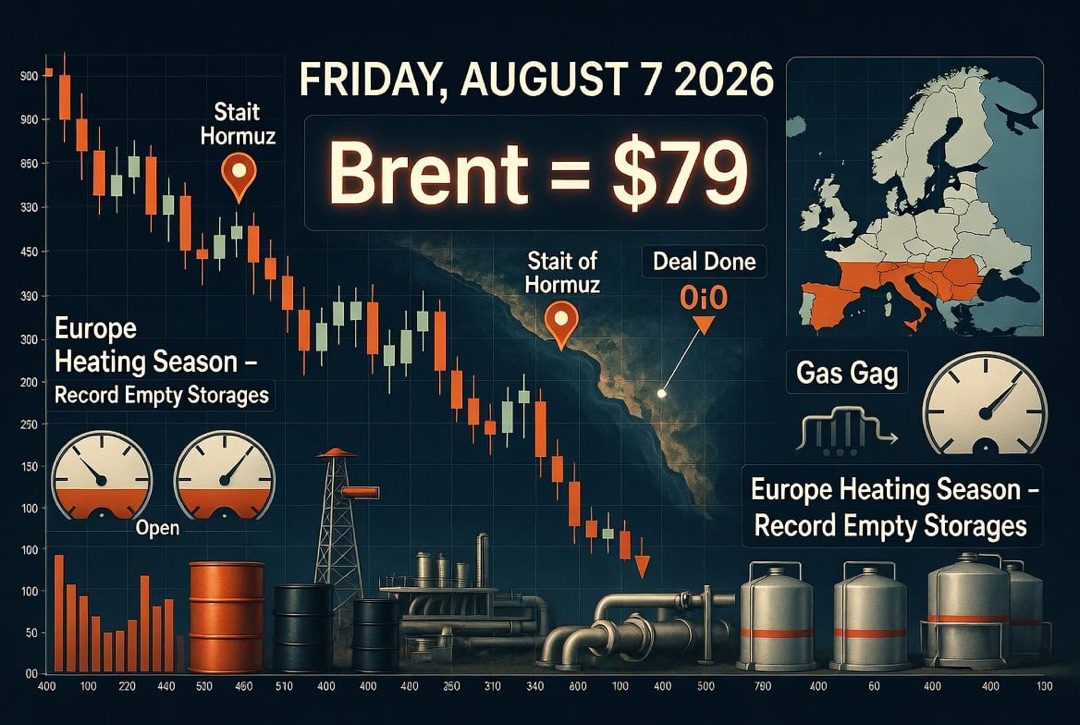
Current developments in the fuel and energy complex as of November 16, 2025, are unfolding against a backdrop of contradictory trends. Geopolitical tensions remain high: the West is expanding sanctions against the Russian oil and gas sector. At the same time, some conflicts are showing signs of de-escalation – a ceasefire is holding in the Middle East, and the U.S. and China have entered a temporary trade truce, positively influencing global demand forecasts. Oil prices have stabilized at moderate levels after a decline: the Brent benchmark is trading at around $63–65 per barrel, while WTI is near $59–60. These levels are significantly below summer peaks and approximately 10% lower than a month ago, reflecting expectations of an oil surplus by year-end. Traders are factoring in a scenario where supply will exceed demand in the fourth quarter, limiting price increases. Concurrently, new risks are preventing prices from falling significantly, as the market accounts for the impact of sanctions and potential supply disruptions.
Oil Market: Supply Surplus and Sanction Factors
The global oil market remains in a state of fragile equilibrium. By mid-November, oil prices have stabilized after a fall: Brent is trading around $63–65 per barrel, and WTI is close to $59–60. These levels are considerably lower than the summer peaks and roughly 10% lower than a month ago, reflecting expectations of a surplus by year-end. Traders are anticipating a scenario where supply will outpace demand in Q4, capping price increases. Meanwhile, emerging risks are preventing prices from dropping significantly, as the market considers the impact of sanctions and potential supply disruptions.
- Increasing Production and Slowing Demand. OPEC+ countries are gradually raising production (an increase of 137,000 barrels per day in December, followed by a pause until April). Outside the alliance, major producers – the U.S., Brazil, and others – have reached record production levels. At the same time, global demand growth has slowed: forecasts indicate that oil consumption will rise by less than +0.8 million barrels per day in 2025 (down from +2 million in 2023) due to a slowdown in the global economy and energy-saving measures.
- Sanction Pressure and Redistribution of Flows. New sanctions from the U.S. and the U.K. against subsidiaries of “Rosneft” and “LUKOIL” will come into effect, complicating the export of Russian oil and forcing Moscow to seek new buyers. Under pressure from Western partners, India unexpectedly announced its readiness to gradually reduce purchases of Russian oil – the loss of this key client could significantly alter global commodity flows.
- Geopolitical Risks Persist. The conflict over Ukraine is still far from resolution, and military actions threaten energy supplies. In mid-November, a Ukrainian drone strike on the port of Novorossiysk damaged oil infrastructure and halted shipments, causing prices to spike by over 2%. Such incidents prevent prices from declining further, maintaining a certain geopolitical premium in the market.
Gas Market: Full Storage and Winter Uncertainty
The situation in the gas market is characterized by seasonal balancing between high storage levels and weather-related risks. Europe enters the heating season with underground storage filled to an average of ~82% – that’s down from record highs of 92% last year, but still provides a substantial reserve. Thanks to a mild autumn, European gas prices have dropped to comfortable levels: the TTF index recently fell to ~€30 per MWh (about $10 per million BTUs), the lowest since spring 2024. However, forecasts of sharp cold returns volatility to the market: as colder weather approaches, prices have begun to rise from their recent lows.
- High Storage Levels and Increasing Consumption. Meteorologists are warning of a significant drop in temperatures in Western Europe (5–7 °C below normal), which will sharply increase gas consumption for heating next week. If the winter proves harsh, European stocks could deplete faster than usual, triggering a new price surge and a need to increase imports.
- LNG Market Provides Balance. The spot market for liquefied natural gas remains a primary source of supply for the EU after pipeline imports from Russia ceased. LNG imports to Europe are consistently high due to record exports from the U.S., Qatar, and other producers. Demand for gas in Asia remains moderate – a slowdown in China's economy and full storage in East Asia mean that competition for LNG resources was not observed in autumn.
Electric Power: Record Renewables and Energy System Resilience
The global electricity sector is undergoing structural changes related to the increasing share of renewable sources and the modernization of energy grids. In 2025, many countries are generating record amounts of electricity from renewables, displacing coal generation. According to analysts, in the first half of 2025, global renewable generation for the first time exceeded that from coal-fired power plants. In some cases, the share of wind and solar in the energy mix has reached 80–100% (Europe). Similar trends are being observed in other major economies (the U.S., China, India), indicating progress in the energy transition. At the same time, the rapid growth of renewables presents new challenges to ensure network stability.
- Energy Supply Reliability. The variable nature of wind and solar requires the development of energy storage systems and backup generation capacity. Gas and coal plants are still employed to handle winter peaks, but their role is gradually diminishing. Developed countries are expected to have enough capacity even during significant cold spells, although electricity prices may rise under such conditions.
- Policy and Technology. Governments worldwide support the trend towards decarbonizing energy. The EU is implementing new ambitious targets for the share of renewables by 2030, while China and India are executing large-scale programs to build solar and wind farms, and the U.S. is revising its clean energy incentives. At the same time, interest in “clean” nuclear generation and hydrogen technologies is rising as elements of future energy systems. Energy companies are investing in upgrading networks and storage solutions. Thus, the electricity sector is moving towards a more sustainable model: infrastructure is being renewed, “green” capacities are increasing, and measures are being taken to ensure the reliability of energy supply during the transition period.
Coal Sector: Demand Plateau and Industry Pressure
The coal industry is at a turning point: global demand is stabilizing at peak levels and starting to decline gradually, while production remains high.
- Peak Consumption. Global coal consumption reached an all-time high in 2024 (~8.8 billion tons), but growth halted in 2025. International forecasts suggest a “plateau” in consumption from 2025 to 2026, followed by a decline as environmental policies tighten and competition from renewables increases.
- Supply Surplus. Coal production remains at maximum levels, creating excessive inventories. Coal prices have fallen to their lowest values in recent years, impacting company profits. Exporters facing high costs (primarily in Russia) are experiencing particular difficulties. The market is already responding with production cuts – many firms are forced to reduce output, adapting to new realities.
Renewable Energy: Record Growth and New Commitments
Accelerated growth in renewable energy continues globally, though to achieve climate goals, the pace of renewable deployment must increase further. Governments are preparing additional support measures for the low-carbon sector.
- Record Capacities. In 2024, approximately 582 GW of new renewables were added globally (a historical record). In 2025, an increase of up to 700 GW is expected. However, to triple capacities by 2030, even higher average annual growth (around 16%) is needed.
- Political Support. At the upcoming COP30 summit, countries will discuss enhancing commitments to transition to clean energy. Many economies have already announced ambitious renewable targets, and despite some challenges (e.g., revising subsidies), the global energy transition is becoming irreversible – renewable technologies are rapidly becoming cheaper and displacing fossil fuels.
Oil Refining and Fuel Market: Stabilization of Supply and Price Control
Following the turbulence of early autumn, the global refined products market is showing signs of stabilization. Easing oil prices and seasonal declines in fuel demand (with the end of the summer driving season) have allowed refineries to replenish gasoline and diesel stocks. In Europe and the U.S., wholesale prices for oil products have retreated from September peaks, leading to a moderate decrease in consumer fuel prices. The situation in the Russian domestic market, which experienced acute gasoline shortages in September, has also normalized thanks to emergency government measures.
- Crisis Measures in Russia. The government temporarily banned the export of gasoline and diesel and increased subsidies to refineries to redirect resources to the domestic market. These steps have allowed the quick resolution of fuel shortages: production has returned to previous levels, gas stations are stocked with fuel, and wholesale prices have decreased. Authorities are announcing plans to gradually lift export restrictions as stability consolidates.
- Global Stabilization. In autumn, the global refined products market received a respite. Increased fuel exports from OPEC countries and Asia partially offset the volumes lost from Russia, and seasonal demand declines enabled stock replenishment. Gasoline and diesel prices have returned to early summer levels: in Europe and the U.S., fuel has significantly decreased compared to September peaks. Consumption of diesel and fuel oil is expected to rise in winter, but without sharp price spikes if oil prices remain stable.