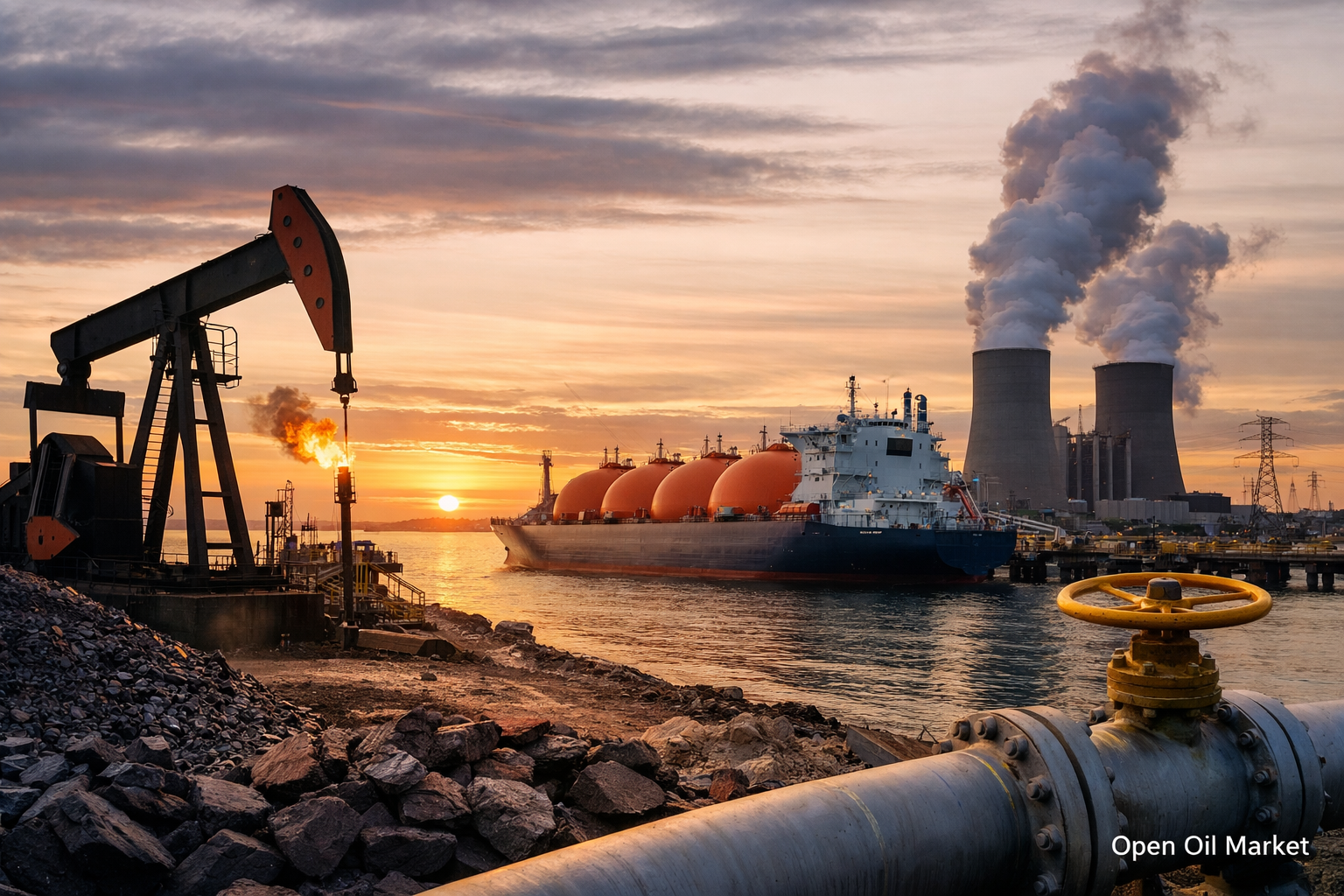
Global Oil, Gas and Electricity Market Enters New Week Amid Rising Oil Prices, LNG Market Tensions and Increased Risks for Global Energy Infrastructure, March 9, 2026
The global energy sector enters a new week under heightened turbulence. For the oil and gas and energy sectors, the key driver remains a combination of geopolitical risk, logistical disruptions, and a reassessment of expectations regarding the global raw materials balance. While early 2026 discussions centered around potential oversupply, by March 9, the focus has shifted to the physical availability of oil, gas, oil products, and the resilience of export infrastructure. For investors, oil companies, refineries, traders, energy-generating assets, and renewable energy participants, this transition signals a more complex pricing environment where the risk premium once again becomes a critical factor in evaluations.
Oil Market: Risk Premium Once Again Determines Barrel Prices
An overarching theme at the start of the week is the sharp increase in the geopolitical risk premium reflected in oil prices. The oil market has ceased to look solely at traditional demand and supply indicators and is now concentrating on the stability of supply from the Arabian Gulf. For the global oil and gas sphere, this means that even moderate logistical disruptions can quickly reshape the price curve.
Currently, several key factors are critical for the market:
- Risks to maritime supplies through key export routes;
- A decline in actual supply from some Middle Eastern producers;
- An increase in the spread between Brent and WTI, which supports the redistribution of raw material flows;
- A surge in demand for alternative oil shipments outside conflict zones.
This creates higher volatility for oil companies and trading houses, while investors face a new phase of re-evaluation of energy assets. If tensions persist, the oil market may remain in a state of scarcity expectation for longer than anticipated just a few weeks ago.
OPEC+ and Market Balance: Formal Quota Increases Take a Backseat
Even the OPEC+ decision to moderately increase production is currently viewed by the market as a secondary factor. While additional volumes are formally important, the more pressing issue for the raw material sector is the speed at which these barrels will actually reach the global market. In the current conditions, logistics, shipping insurance, and export infrastructure availability are as significant as the production quotas themselves.
For the oil and petroleum products market, this signifies the following:
- Paper increases in supply don’t always translate into physical export boosts;
- The premium for secure routes amplifies regional discrepancies;
- Refineries and large consumers begin to preemptively restructure supply chains;
- Investors once again factor in more expensive insurance and higher transportation costs into their evaluations.
Thus, while OPEC+ news is important, the current oil and gas market is driven less by quota numbers and more by delivery risks.
Gas and LNG: Global LNG Market Tightens Significantly
The gas and LNG segment remains a significant driver for the global energy sector. Tensions surrounding supply from Qatar have heightened nerves in Asian and European markets. For importers, this means rising spot prices, while producers and suppliers have the opportunity for accelerated margin growth in the short term.
Crucially, pressure on the LNG market is already impacting not only quotes but real consumption systems. Several countries are forced to redistribute gas between industry and power generation, directly influencing fertilizer production, petrochemicals, energy-intensive industrial products, and electricity costs.
For market participants, the current situation presents several conclusions:
- Spot LNG is once again becoming an expensive and scarce resource;
- Long-term contracts regain strategic value;
- Power generation is prioritized over certain industrial demands;
- Asian buyers intensify competition for available shipments.
If disruptions persist, the gas market could exert additional upward price pressure on both electricity and petrochemicals.
Refineries and Oil Products: Refining Takes Center Stage Again
For the petroleum products sector, early March sees an increase in the significance of refining. Amid risks regarding raw materials and disruptions in some infrastructure, the market is closely monitoring the stability of refineries, as well as gasoline, diesel, kerosene, and aviation fuel exports. For investors, this is a crucial moment: during periods of turbulence, strong refining assets often outperform market expectations.
Currently, the main areas of focus include:
- Refining margins and crack spread dynamics;
- The operational stability of major refineries in the Arabian Gulf;
- The availability of feedstocks for refining and the speed of deliveries;
- Regional imbalances in diesel, gasoline, and petrochemical components.
Particularly significant for the oil products market is that rising prices of diesel and aviation fuel can quickly impact transportation and industrial inflation. This makes the refinery and logistics segment one of the key areas to monitor in the coming days.
Electricity: Gas, Grids and Data Centers Transform Demand Structure
The global electricity sector enters 2026 with consistent load growth. Traditional industrial demand is complemented by the accelerated development of data centers, digital infrastructure, and new energy-intensive services. For the energy sector, this signifies that demand for reliable and rapid generation remains high, and natural gas retains a systemic role despite the expanding share of renewables.
Three long-term trends are intensifying in the electricity market:
- Increased base load from the digital economy;
- The growing role of gas generation as a balancing source;
- Accelerated development of grids, energy storage, and flexible capacities.
For energy companies, this means that investments in gas stations, network infrastructure, storage, and hybrid projects will stay in the spotlight. An important note for investors is that the electricity sector is now more closely intertwined with oil and gas than previously thought: expensive gas and LNG risks are directly reflected in power and end energy costs.
Renewables and New Energy System Architecture
The renewables sector continues to hold strategic importance, particularly against the backdrop of high imported gas prices in several regions. However, 2026 illustrates that solar and wind projects alone are insufficient for energy system stability. The market increasingly evaluates not just individual generation but a cohesive connection of renewables, storage, grid modernization, and backup gas capacity.
For the global energy sector, this signifies a shift from the straightforward idea of "adding more renewables" to a more mature model:
- Renewables reduce dependence on expensive fuels;
- Storage mitigates price volatility;
- Gas remains a backup for peak demands and shortages;
- Grid investments become a prerequisite for scaling.
Consequently, news about new power plants, storage systems, and corporate energy contracts is now impacting the market as significantly as traditional news about oil and gas production.
Coal and Asia: The Importance of Traditional Fuel Persists
Although the long-term energy transition continues, coal remains a crucial part of the global energy landscape, particularly in Asia. For countries with high pressure on electricity systems, coal still serves as a safety net against gas price spikes and LNG supply disruptions. This is especially relevant during periods when imported gas fuel becomes prohibitively expensive.
For the coal market, two opposing processes are crucial: on one hand, there is a continuous push to gradually limit coal's role in the energy balance; on the other, energy security compels governments to retain coal capacities within their systems. For investors, this indicates that the coal sector cannot be entirely dismissed, especially in the Asian region.
China, Asia and the Strategic Reconfiguration of Raw Material Demand
Attention must be paid to China's policy, as it continues to focus on stable domestic oil production, the growth of the gas sector, the development of strategic reserves, and simultaneously increasing the share of non-fossil energy. For the global market, this is an important signal: major economies are not betting on a single fuel type but are building a multilayered energy security model.
This means that, in the medium term, global demand will be divided among several segments simultaneously:
- Oil will remain the basis for transportation and petrochemical consumption;
- Gas will strengthen its positions in electricity generation and industry;
- Renewables will continue to expand as a means of reducing import dependency;
- Coal in Asia will maintain a share of the load as a reserve resource.
What This Means for Investors and Energy Sector Participants
As of March 9, 2026, the global energy sector enters a week with a clear shift from the topic of oversupply to that of supply reliability. For oil and gas, petroleum products, refineries, the electricity sector, and renewables, this indicates a new balance of risks and opportunities. In the short term, the key beneficiaries appear to be producing companies, stable export routes, quality refining assets, and infrastructure able to rapidly adapt to changing flows.
Investors and market participants should monitor four key directions:
- The dynamics of Brent, WTI, and the Middle Eastern risk premium;
- The situation in the LNG market and the reactions of major Asian importers;
- Refinery margins, diesel, gasoline, and kerosene supplies;
- A surge in demand for electricity, gas generation, and renewables projects with storage.
The main takeaway at the week’s outset is straightforward: the global energy market is once again evaluating not only the volume of resources but also the ability to deliver them safely and rapidly to consumers. This factor will define oil and gas and energy news in the coming days.