Energy and Oil & Gas Sector News for June 21, 2026: The Situation around the Strait of Hormuz, Oil and Gas Market, LNG, Oil Products, Refineries, Power Sector, Renewable Energy, Coal, and Key Global Energy Trends for Investors
The global fuel and energy complex enters Sunday, June 21, 2026, with heightened sensitivity to geopolitical issues, logistics, and electricity demand. The central theme for investors, oil companies, gas traders, refineries, fuel companies, and energy market participants is the gradual recovery of supplies through the Strait of Hormuz, all while maintaining a high-risk premium in oil, LNG, oil products, and freights.
The market is no longer responding solely to Brent or WTI oil prices. The focus is on the entire supply chain: oil and gas production, tanker availability, transportation insurance, refinery loading, diesel margins, LNG balance between Europe and Asia, rising electricity demand from data centers, and accelerated investments in renewables, grids, and energy storage. For a global audience, this signifies a shift from a classic commodity cycle to a more complex model where energy security again becomes a key investment theme.
Oil: Military Premium Reduction Does Not Eliminate Structural Risks
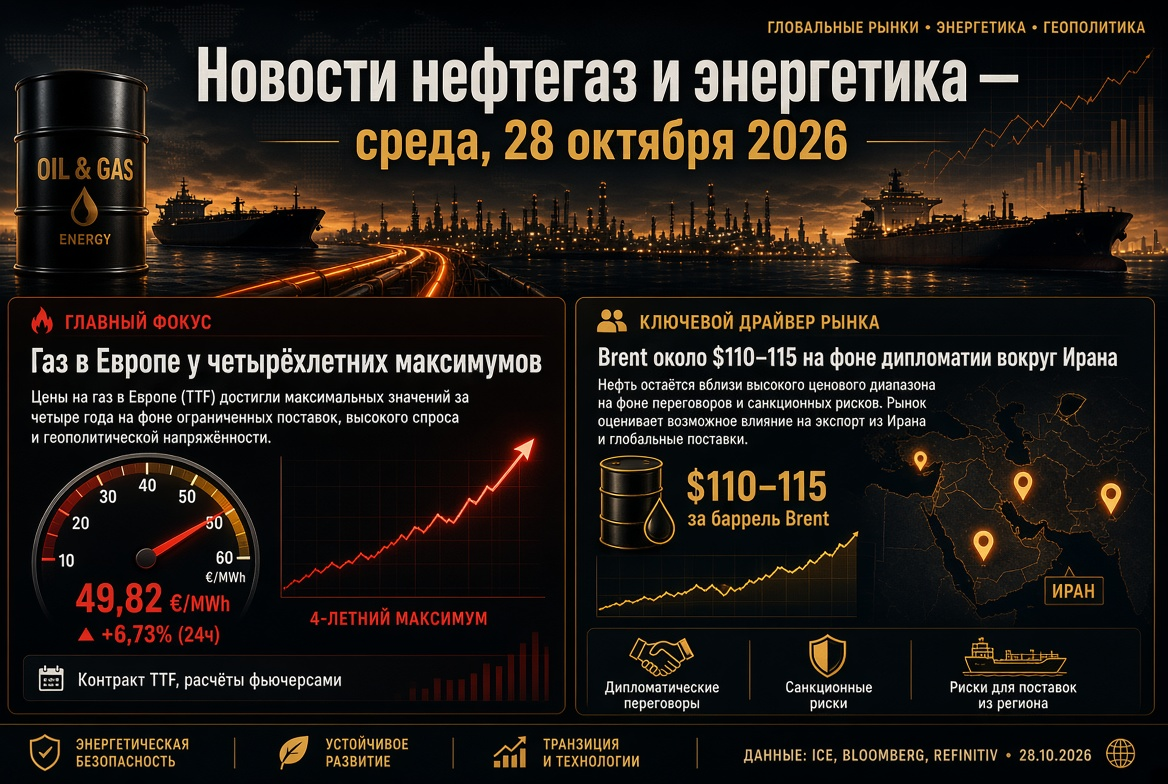
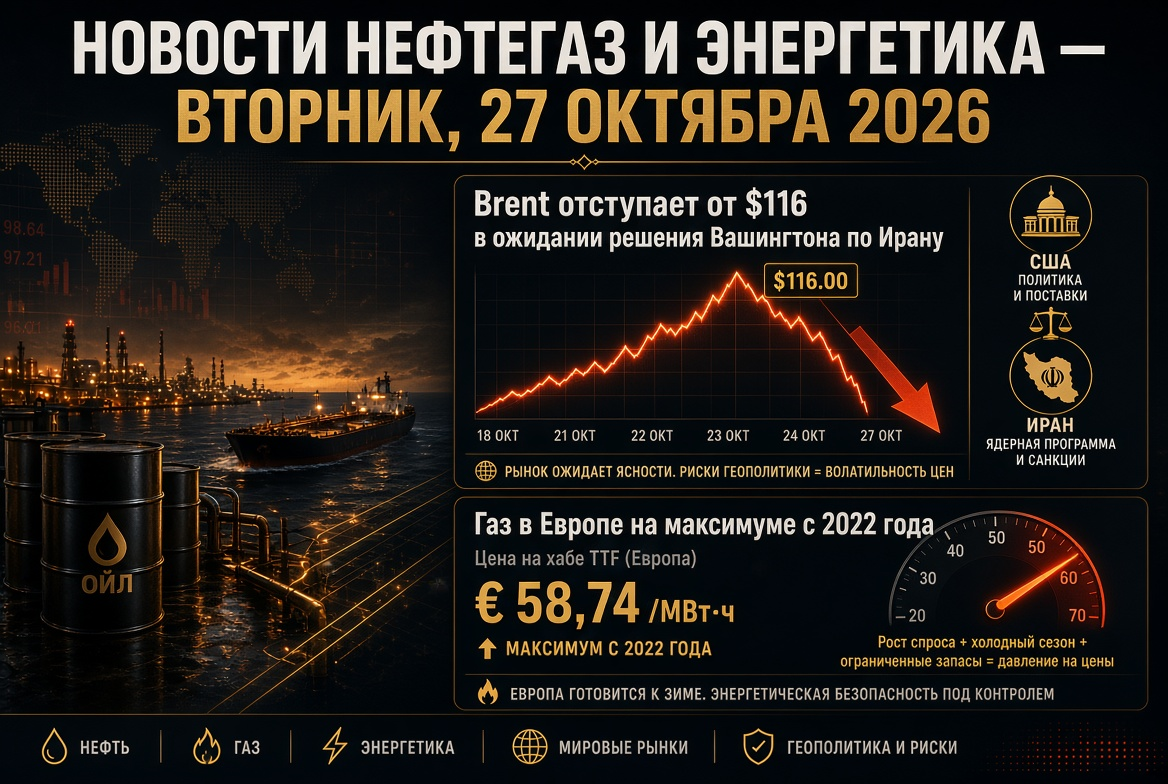
Following a sharp period of uncertainty, the oil market has begun to factor in the possibility of a gradual recovery of flows through the Strait of Hormuz. This has reduced some of the geopolitical premium in prices; however, the physical market remains tense. For oil companies and traders, the key question is no longer just how many barrels may return to the market, but how quickly normal supply routes will recover.
Three opposing factors are simultaneously at play in the oil market:
- Expectations of increased supplies from Middle Eastern countries following the restoration of maritime logistics;
- Low commercial oil and oil product inventories after a period of disruptions;
- Continued risks to the tanker market, insurance, port infrastructure, and loading schedules.
For investors, this creates a dual picture. On one hand, the recovery of supplies may limit oil price growth. On the other hand, the market is not returning to a calm state instantaneously: oil logistics, contract schedules, and refinery operations require time to normalize. Therefore, short-term volatility in the commodity sector remains high.
IEA and OPEC Diverge in Demand Forecasts
A major analytical intrigue for the global oil and gas market is the divergence in forecasts between the International Energy Agency (IEA) and OPEC. The IEA emphasizes a likely transition of the oil market to surplus following the restoration of Middle Eastern supplies, while OPEC maintains a more optimistic view on long-term demand and does not foresee an imminent peak in oil consumption.
This divergence is crucial for assessing the capitalization of oil companies, production plans, dividend policies, and investment programs. If the market indeed transitions to a surplus, pressure on Brent and WTI prices could intensify. Conversely, if OPEC's scenario proves closer to reality, the oil sector will retain a more stable long-term investment base supported by demand in India, Southeast Asia, Africa, Latin America, and the Middle East.
For energy market participants, this means the necessity to evaluate not just a single base scenario but a range of probabilities:
- Rapid recovery of supplies and reduced price pressure;
- Prolonged normalization of logistics and retention of the risk premium;
- Rising demand in developing economies compensating for weakness in certain regions;
- Acceleration of the energy transition, limiting long-term demand for hydrocarbons.
Gas and LNG: Europe Strengthens Energy Independence
The gas market remains one of the key centers of global energy. Europe continues to reshape its supply model, reducing its reliance on Russian gas and LNG. For European energy companies, this means a reassessment of long-term contracts, logistics, portfolio supplies, and trading strategies.
The ban on trading Russian LNG for EU operators starting in 2027 strengthens the structural shift in the market. Even if physical gas is directed outside the European Union, European companies will be limited in their ability to participate in such deals. This alters the balance of power in the LNG market and enhances the significance of suppliers from the U.S., Qatar, Africa, and Australia.
For Asia, the situation also remains sensitive. China, India, Japan, South Korea, and ASEAN countries compete for available LNG cargoes, especially during periods of heat and rising electricity consumption. As a result, natural gas increasingly becomes not only a fuel for generation and industry but also a strategic tool for energy security.
Refineries and Oil Products: Diesel Margin Remains Strong
The refining sector is becoming one of the main beneficiaries of the current market configuration. Even with falling oil prices, oil products can remain expensive due to limited availability of refining capacities, export disruptions, changes in crude oil grades, and rising demand for diesel, jet fuel, and gasoline.
Several factors are significant for refineries:
- Availability of suitable crude oil for processing;
- Stability of maritime supplies and cargo insurance;
- Seasonal demand for gasoline and diesel;
- Maintenance work and unscheduled shutdowns of refining capacities;
- The difference between crude oil prices and the cost of finished oil products.
Strong refining margins sustain investor interest in the downstream segment. However, for fuel companies and end consumers, this means the risk of maintaining high prices for oil products even with a correction in oil prices. On a global scale, it is diesel, jet fuel, and gasoline that become the indicators of real tensions in the energy supply chain.
Electricity: Data Centers Transform Demand Structure
The power sector is stepping into the forefront of the investment agenda. The rapid growth of artificial intelligence, cloud computing, and data centers is increasing the load on the power systems of the U.S., Europe, and Asia. This creates a new cycle of capital investments for grid companies, electricity producers, and equipment suppliers.
Large data centers consume electricity volumes comparable to small cities. Therefore, power systems require not only new generation but also modernization of grids, transformers, substations, energy storage systems, and connection mechanisms for large consumers. For investors, this enhances the attractiveness of companies involved with power grids, gas generation, renewables, industrial batteries, and energy equipment.
Concurrently, risks are rising. If new capacities are brought online more slowly than demand grows, certain regions may face power shortages, rising tariffs, and the necessity to extend the operation of gas or coal plants. This elevates the power sector to one of the key directions in the global energy transformation.
Renewables, Grids, and Storage: Capital Shifts to Infrastructure
Renewable energy continues to gain share in the global energy balance. Solar and wind generation are becoming increasingly competitive, but their growth demands massive investments in grids, storage, and balancing capacities. For the renewable sector, 2026 becomes not only a year of installed capacity growth but also a year of infrastructure testing.
A key trend is the transition from merely building solar and wind power plants to a comprehensive energy infrastructure model. Investors are increasingly required to evaluate not just individual generation projects, but the entire system:
- Renewable energy generation;
- Energy storage;
- Transmission and distribution networks;
- Digital load management;
- Backup capacities using gas, nuclear energy, or hydropower.
For Europe, a significant factor remains the growth of the share of renewables in the power sector. For the U.S., it is the combination of renewables, gas, nuclear energy, and grid modernization. For Asia, the balance between rapid demand growth, energy security, and fuel availability is crucial.
Coal: Role Diminishes, but Demand in Asia Remains Stable
Coal continues to hold a contentious position in the global energy landscape. On one hand, the long-term trend is toward reducing the share of coal generation in Europe and several developed economies. On the other hand, Asia continues to utilize coal as an accessible and reliable source of base load power.
Hot weather, increased use of air conditioning, and the need for stable electricity supply support demand for coal in China, India, Japan, and Southeast Asian countries. However, the increase in renewables and weakness in certain industrial sectors limit import growth during some periods. For coal companies, this indicates a more complex market environment: volumes remain significant, but the long-term outlook for the sector depends on decarbonization policies and the cost of alternative generation.
Investors need to recognize that coal is no longer a universal bet on rising energy demand. Its role is increasingly defined by regional specifics, weather factors, gas prices, and the willingness of governments to support traditional generation for the sake of energy system reliability.
Oil and Gas Investments: Capital Shifts to Gas and Energy Security
Global investments in energy in 2026 are distributed unevenly. The oil sector faces investor caution due to price volatility and political risks, while gas, LNG, grids, renewables, storage, and low-carbon technologies receive increased attention. For oil and gas companies, this entails the necessity to demonstrate the resilience of their business models not only through extraction but also via logistical flexibility, market access, and quality of processing.
Gas projects are gaining support due to the role of natural gas as a transition fuel. LNG remains a key tool for supply diversification in Europe and Asia. Simultaneously, coal and nuclear energy are returning to discussions as elements of energy system reliability, especially where electricity consumption growth outpaces the introduction of new capacities.
What is Important for Investors and Energy Market Participants
On Sunday, June 21, 2026, the global market for oil, gas, electricity, renewables, coal, oil products, and refineries remains in a phase of restructuring. The key takeaway for investors: the energy sector can no longer be analyzed solely through oil prices. Logistics, processing, LNG, electricity grids, data centers, energy security, and regional politics are now at the forefront.
In the coming weeks, market participants should closely monitor the following areas:
- The speed of supply recovery through the Strait of Hormuz and the reaction of Brent and WTI prices;
- The dynamics of oil, diesel, gasoline, and jet fuel inventories;
- New European Union decisions on gas and LNG;
- Asia's demand for natural gas, coal, and oil products during the summer peak;
- Refinery margins and the availability of refining capacities;
- The increasing load on electricity grids due to data centers and artificial intelligence;
- Investments in renewables, storage, grids, and backup generation.
For oil companies, gas suppliers, fuel traders, refinery operators, and energy investors, the current period presents both opportunities and risks. The winners are likely to be those companies that control not only raw materials but also infrastructure: transportation, processing, storage, power grids, flexible contracts, and access to end consumers. It is this infrastructural resilience that becomes the main asset of the global energy sector in 2026.