Comprehensive Overview of Economic Events and Corporate Reports for June 28, 2026: Fed, Japanese Data, Europe Ahead of ECB Forum, U.S. Labor Market Report, and a Quiet Corporate Earnings Day
Sunday, June 28, 2026, appears to be a transitional day between the volatile ending of the first half of the year and a macroeconomic week packed with events from June 29 to July 3. For investors from the CIS and global market participants, the key significance of the day lies not in the density of publications, but in the preparation for the next set of signals: U.S. labor market data, comments from Federal Reserve officials, the ECB forum in Sintra, European business activity indicators, and Japanese statistics on domestic demand.
The economic calendar for Sunday is limited, which is typical for a weekend. However, under the conditions of heightened market sensitivity to inflation, interest rates, oil, the dollar, and assessments of the technology sector, even a single speech from a Fed representative can influence expectations regarding bond yields and currency dynamics. Corporate reports from major public companies in the S&P 500, Euro Stoxx 50, Nikkei 225, and MOEX do not create a dense calendar for June 28 itself, but investors are already preparing for reports at the beginning of the week.
Macroeconomic Calendar for June 28, 2026
The main economic events of the day are focused in the U.S. and Asia. Sunday does not provide a complete statistical picture but aids markets in forming expectations ahead of Monday.
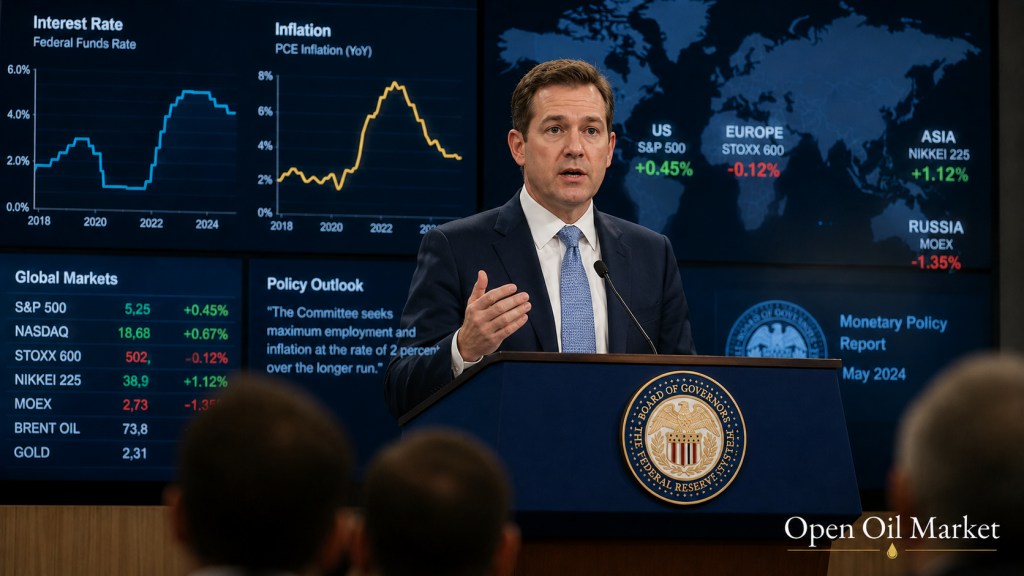
- U.S.: Speech by Richmond Fed President Thomas Barkin. The main focus will be on inflation, the labor market, the resilience of consumer demand, and the potential trajectory of Fed interest rates.
- Japan: Late block of statistics spanning Sunday and Monday including retail sales, housing construction, and building orders. This is crucial for the Nikkei 225 through assessments of domestic demand, the banking sector, developers, and industrial companies.
- Europe: Preparation for the publication of economic sentiment indicators and the ECB forum in Sintra, starting June 29, which will serve as an important platform for signals regarding monetary policy.
- Russia and CIS: The local market enters the week without a substantial corporate earnings block on Sunday, but attention remains on dividend stories, ruble liquidity, the commodity sector, and key rate dynamics.
U.S. Fed: Why Thomas Barkin's Speech is Important for Investors
For global markets, speeches from Fed officials currently carry heightened significance. Investors are assessing not only current inflation but also the likelihood that the U.S. regulator will maintain its hawkish stance longer than previously expected. The focus is on three questions:
- How resilient is consumer demand in the U.S.?
- Are there signs of a cooling labor market ahead of the NFP release?
- Could the Fed allow for a higher rate or a longer period of restrictive policy?
For growth stocks, particularly in the technology sector, Fed comments are important due to the discount rate. The tougher the tone from the regulator, the higher the pressure on the multiples of companies with high expected future earnings. For bonds, a key indicator will be the response of 10-year U.S. Treasuries. For the currency market, the dynamics of the dollar against the euro, yen, pound, and currencies of emerging markets will matter.
U.S. Ahead of Labor Market Week: NFP, JOLTS, ADP, and Consumer Confidence
Although the main data points for the U.S. will be released after June 28, Sunday becomes a day of positioning ahead of the employment statistics. Investors are preparing for the upcoming Nonfarm Payrolls report for June, JOLTS data on job openings, the ADP report for the private sector, consumer confidence index, and manufacturing PMI.
For the U.S. stock market, the connection between "labor market — inflation — Fed rate" remains the primary channel for reassessing risk. Strong employment could support corporate profits and the consumer sector but simultaneously heighten expectations of a more aggressive Fed policy. Conversely, weak employment might drive demand towards safe assets and reduce bond yields, but worsen forecasts for cyclical sectors.
For investors from the CIS, this block is significant through several market channels:
- The exchange rate of the dollar and the cost of funding within the global financial system;
- Prices for oil, gold, and industrial metals;
- Risk appetite in emerging markets;
- Valuations of exporters, banks, and commodity companies in local markets.
Europe: ECB Forum in Sintra and Economic Sentiment Indicators
The European agenda for June 28 is primarily linked to preparations for the ECB forum in Sintra, scheduled from June 29 to July 1. For Euro Stoxx 50, this event is comparable to a major macroeconomic conference: markets will be looking for signals regarding the balance between inflation, growth, innovation, investment, and financial stability.
Special attention will be paid to the rhetoric of ECB representatives focused on three areas:
- Inflation: How sustainable is the slowdown in prices, and is there a risk of renewed pressure from energy prices?
- Economic Growth: Is the Eurozone still in a weak recovery phase, or is it transitioning to a more robust phase?
- Financial Conditions: How do ECB interest rates affect banks, business lending, real estate, and consumer demand?
For investors in European equities, key sectors include banking, industry, automobile manufacturing, energy, and the consumer sector. If the ECB maintains a cautious tone, Euro Stoxx 50 might receive support from expectations of stable policy. If the rhetoric turns more hawkish, pressure may increase on developers, retail, and highly leveraged companies.
Asia and Japan: Retail Sales, Construction, and Signals for Nikkei 225
Japanese statistics spanning June 28 and 29 are crucial for understanding the state of domestic demand. Retail sales indicate how consumers can sustain economic growth amidst changing prices, wages, and yen exchange rates. Data on housing construction and building orders help evaluate the investment cycle, the health of developers, banking credit, and industrial demand.
For the Nikkei 225, this data has a dual significance. On one hand, strong domestic demand supports banks, retail, transport, real estate, and construction companies. On the other hand, excessive economic resilience might heighten expectations for further normalization of the Bank of Japan's policy, potentially supporting the yen and exerting pressure on exporters.
Investors should focus not only on the fact of growth or decline of indicators but also on the data structure: consumer activity, building orders, price dynamics, and currency market reactions. For global portfolios, Japan remains a key market for diversification, particularly against the backdrop of volatility in the U.S. and Europe.
U.S. Corporate Reports: A Quiet Sunday Before a New Wave of Releases
The calendar for corporate reports on June 28, 2026, remains sparse. Large companies in the S&P 500 typically do not release full quarterly results on Sundays, so focus shifts to reports at the beginning of the week. Starting from June 29-30, investors will be watching for new releases in the industry, technology, consumer sectors, and software.
The immediate agenda following Sunday includes several key areas:
- Technology and Defense Solutions: Demand for unmanned systems, software products, AI infrastructure, and corporate automation;
- Consumer Sector: Margins, inventory levels, demand sensitivity to prices, and forecasts for the second half of the year;
- Financial Data from Mid-Sized Companies: Revenue resilience, debt levels, and ability to maintain profitability under high rates.
For the S&P 500, the main question is whether corporate profits will affirm the high market valuations. If management forecasts are cautious, investors might shift from buying indices to more selective stock picking.
European, Asian, and Russian Companies: What Matters for Euro Stoxx 50, Nikkei 225, and MOEX
As of June 28, no significant reports from the largest public companies in the Euro Stoxx 50, Nikkei 225, and MOEX are highlighted in the calendar. This does not diminish the importance of the corporate agenda: markets are already eyeing the upcoming reports at the beginning of July, operational indicators, dividend dates, and management comments.
For European companies, the main risk is weak domestic demand and capital costs. For Japanese issuers, the yen exchange rate, export margins, and the dynamics of domestic consumption are crucial. For Russian companies on MOEX, factors include the ruble, interest rates, dividends, oil, gas, metals prices, and budget parameters.
In the Russian market, investors should pay special attention to:
- Exporters of oil, gas, metals, and fertilizers;
- Banks and financial companies sensitive to interest rates;
- Retail and telecoms as protective stories of domestic demand;
- Utilities and infrastructure companies as a dividend segment;
- Companies with high debt levels vulnerable to borrowing costs.
Commodities, Oil, Gold, and Currencies: The Global Environment for Investors
Commodity markets enter the last week of June with heightened dependence on geopolitics, dollar dynamics, and expectations from the Fed. Oil remains the key indicator for CIS markets: Brent and WTI directly impact oil and gas stocks, budget expectations, currency flows, and inflationary risks.
Gold retains its role as a safe-haven asset, but its dynamics are dependent on Treasury yields and the dollar exchange rate. Under a hawkish Fed tone, gold might face pressure, while rising uncertainty could attract capital flows. Industrial metals will react to China, PMI, construction activity, and demand from the energy transition.
For CIS currencies, three external factors are crucial: dollar liquidity, oil prices, and global risk appetite. If investors seek the safety of the dollar and U.S. bonds, pressure on emerging market currencies may increase. Should the Fed's rhetoric prove neutral, markets could return to risk-on buying.
Summary of the Day: What Investors Should Pay Attention To
Sunday, June 28, 2026, does not present a day of dense reporting or a high number of macro publications, but it sets the tone ahead of one of the crucial weeks at the start of the second half of the year. Investors should use this day to prepare their portfolios, reassess risks, and determine reaction levels for upcoming data.
- Fed: Monitor the tone of Thomas Barkin's speech. Any hint at a more hawkish policy could affect the dollar, bonds, and growth stocks.
- U.S.: Prepare for NFP, JOLTS, ADP, and PMI. The labor market will be a key test for Fed rate expectations.
- Europe: Evaluate signals from the ECB forum in Sintra and economic sentiment indicators. This is crucial for Euro Stoxx 50, banks, and industry.
- Japan: Focus on retail sales, construction, and yen reactions. These data could impact Nikkei 225 and exporters.
- Corporate Reports: There are no major releases on June 28, but a new block of reporting begins on June 29, which will reflect earnings quality and forecast resilience.
- MOEX and CIS: Maintain focus on oil, ruble, interest rates, dividends, and liquidity. For local investors, these are key drivers of short-term returns.
The primary investment idea of the day is to avoid rushing to conclusions based on a single event and to consider June 28 as a preparatory day ahead of a week in which the market will receive far more data on employment, inflation expectations, monetary policy, and corporate profits.