Economic Events and Corporate Reports on Saturday, June 20, 2026: ECB Representative Speech, Interest Rates Impact on Markets, Situation in the USA, Europe, Asia, and Russia, as well as Key Benchmarks for Investors
Saturday, June 20, 2026, sees global financial markets in a state of low trading activity, yet it remains significant for investors. Major stock exchanges in the USA, Europe, Japan, and Russia are closed for the weekend, and the corporate calendar is almost empty for the largest public companies. However, days like these often become crucial for reevaluating portfolios, analyzing macroeconomic risks, preparing for the upcoming week, and assessing the impact of interest rates, inflation, oil prices, and currency markets on investment decisions.
The primary focus of the day is the comments from representatives of the European Central Bank, the global backdrop following the decisions made by the Fed, ECB, and Bank of England, the dynamics of oil, the dollar, bond yields, and investors' expectations ahead of a new series of macroeconomic publications. For the CIS audience, signals regarding global demand, commodity markets, the dollar exchange rate, the Russian stock market, the MOEX index, and the prospects for exporters are particularly important.
Overall Picture of the Day: Quiet Calendar but Tense Macro Context
Economic events on June 20, 2026, appear moderately eventful: there are no major publications regarding GDP, inflation, labor markets, or industrial production scheduled in leading economies. Nevertheless, investors continue to evaluate the implications of central banks' decisions made over the past week. The market is positioned between two factors: on one hand, the decline in the geopolitical risk premium in oil supports risk appetite; on the other hand, the firm rhetoric from central banks limits the potential for rapid stock growth.
- The US stock markets approach a new week after closing for Juneteenth and a long weekend.
- European investors are assessing the implications of the ECB rate hike and weak signals regarding economic growth in the Eurozone.
- Asian markets are closely monitoring the yen, exporters, and the demand for technology stocks.
- The Russian market is focused on oil, the ruble, dividend expectations, and the geopolitical backdrop.
Main Macroeconomic Event: Philip Lane's Speech
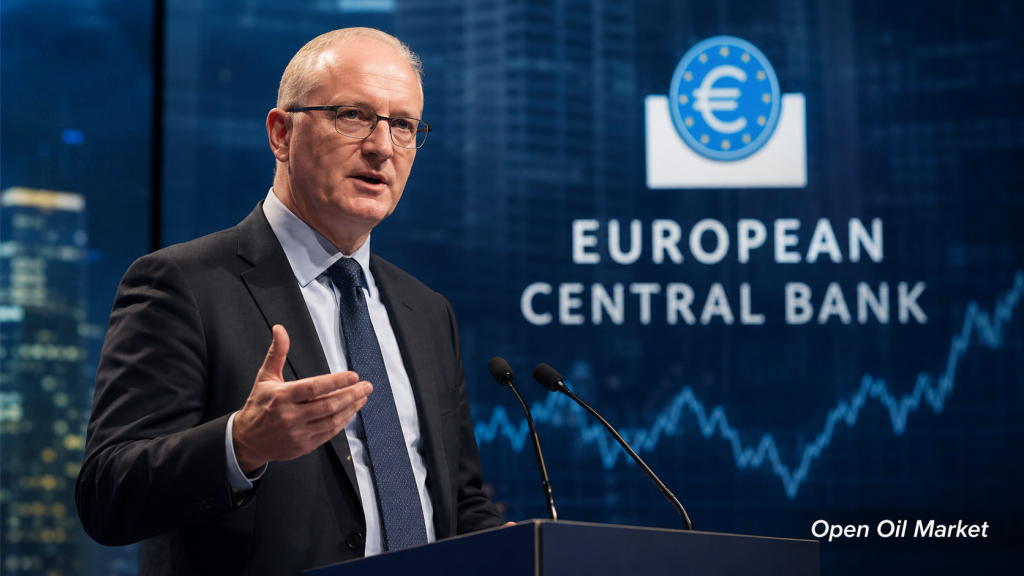
A key event for the global economic calendar on Saturday is the speech by Philip Lane, the chief economist of the European Central Bank. For the market, the significance lies not merely in the formal statements but also in potential signals regarding the trajectory of interest rates, inflation expectations, and the resilience of the Eurozone economy.
Following the ECB's rate hike, investors will be looking for answers to three questions:
- Is the regulator prepared to continue tightening monetary policy?
- How seriously does the ECB perceive the risk of accelerating inflation due to energy factors?
- Could weak economic growth in the Eurozone limit further rate increases?
For the bond market and currency market, comments from the ECB are especially important. A more hawkish stance could bolster the euro and lift yields on European government bonds. Conversely, a more cautious tone might increase demand for safe-haven assets and lower expectations for further tightening.
USA: Investors Assess the Implications of the Fed's Pause
The American stock market is closed on Saturday, yet the USA remains the main focus for global investors. After the Fed's decision to keep the rate unchanged, the market continues to assess how likely another round of policy tightening is. The main concern for Wall Street is the combination of persistent inflation, a strong labor market, and potential pressure from oil prices.
For the S&P 500, Nasdaq Composite, and Dow Jones indexes, the key factors in the coming days will be:
- Expectations regarding core inflation and the PCE index;
- The dynamics of U.S. Treasury yields;
- The strength of the dollar relative to the euro, yen, and currencies of emerging markets;
- Demand for the technology sector and stocks of companies related to artificial intelligence;
- Prospects for corporate margins in a high-rate environment.
For investors in the CIS, the U.S. market remains a barometer for global risk appetite. If U.S. bond yields continue to rise, it could exert pressure not only on growth stocks but also on commodity assets, emerging market currencies, and stock indices outside the U.S.
Europe: ECB, Inflation, and Pressure on Economic Growth
The European market enters the weekend with heightened sensitivity to ECB statements. The rate hike increases pressure on borrowers, banks, developers, and industrial companies, while simultaneously supporting the financial sector through higher interest margins. For the Euro Stoxx 50 index, the balance between large corporations' profits and the risk of slowing Eurozone economic growth is crucial.
The most sensitive sectors in Europe include:
- Banks — benefiting from high rates but dependent on the quality of their credit portfolio;
- Industrials — affected by weak demand, energy costs, and the euro exchange rate;
- Automakers — relying on China, exports, and consumer demand;
- Energy — influenced by oil, gas, and climate policy;
- The consumer sector — vulnerable to inflation and declining real incomes.
For investors, it is not just the fact of rate increases that matters, but their implications for equity valuations. The higher the discount rate, the more cautious the market is in valuing companies with high debt burdens and long profit horizons.
Asia: Yen, Exporters, and the Tech Sector
The Asian block is also outside active trading sessions on June 20 on key exchanges, including Japan. For the Nikkei 225 index, the exchange rate of the yen remains a critical factor. A weak yen supports Japanese exporters but increases inflationary pressure through the cost of imported goods and energy.
Investors should watch three key areas:
- Japanese exporters — automakers, electronics, industrial equipment;
- Asian technology companies — semiconductors, data center components, and suppliers for artificial intelligence;
- Chinese demand — raw materials, consumer goods, logistics, and industrial production.
For the global market, Asia remains an important indicator of the manufacturing cycle. If demand for chips, electronics, and industrial equipment remains strong, it could support global growth stocks. Conversely, if data from China and Japan fall short of expectations, investors may reduce holdings in cyclical sectors.
Russia and CIS: Oil, Ruble, and MOEX Index
For the Russian market, Saturday is a non-trading day, but the economic backdrop remains significant. The MOEX index, along with shares of oil and gas companies, banks, and metallurgists, depends on three key factors: oil prices, the ruble exchange rate, and expectations regarding monetary policy. For CIS investors, the link between global commodity prices and local assets is particularly important.
If the oil premium decreases, Russian exporters may face more cautious earnings estimates, especially if the ruble simultaneously strengthens. In an environment of rising geopolitical tensions, oil may receive support, but such a scenario usually increases overall volatility and diminishes risk appetite.
Investors in the Russian market should focus on:
- Oil and gas sector — sensitivity to Brent, Urals, and tax burdens;
- Banks — the influence of high rates on lending and profitability;
- Metallurgists — export restrictions, China demand, and currency earnings;
- IT companies — corporate events, investment presentations, and growth expectations;
- Dividend stories — cash flow stability and debt burden.
Corporate Reports: Few Major Publications
The corporate earnings calendar for June 20, 2026, remains almost empty for the largest public companies. There are no significant reports from systemic issuers for major indices such as the S&P 500, Euro Stoxx 50, Nikkei 225, and MOEX expected on this date. This is a typical scenario for Saturdays: most large American, European, Japanese, and Russian companies publish results during weekdays before the market opens or after trading closes.
Structure of the day by regions:
- USA: No major reports from S&P 500 companies are scheduled for June 20.
- Europe: No significant reports from Euro Stoxx 50 companies are expected on this date.
- Japan: No major reports from Nikkei 225 companies are announced for Saturday.
- Russia: No significant financial reports from large MOEX issuers are highlighted for the day.
- Asia outside major indices: Small Indian issuers, including Binny Limited and Sparc Electrex Limited, appear in calendars, but their impact on the global market is limited.
The absence of major reports does not equate to a lack of corporate risks. Investors are preparing for the following week, where attention may shift to companies in the logistics, semiconductor, consumer goods, and financial sectors.
Oil, Currency, and Bond Markets: Key Indicators for Investors
The primary intermarket indicator remains oil. For the global economy, a decrease in oil prices helps alleviate inflationary pressures, but for commodity exporters, it may signal a reassessment of revenue expectations. For Russia, Kazakhstan, and other CIS economies, the oil market remains one of the fundamental factors for budget revenues, currency balance, and the valuations of commodity companies’ stocks.
The currency market also demands attention. A strong dollar typically increases pressure on emerging markets, reduces the attractiveness of dollar-denominated commodity assets, and heightens investor caution. A weakening yen, in turn, affects the competitiveness of Japanese companies and expectations regarding potential actions by Japanese authorities.
In the bond market, investors should monitor U.S. and European government bond yields. Increasing yields make bonds more competitive relative to stocks, particularly in sectors with high valuations and weak current cash flows.
What to Pay Attention to as an Investor
Saturday, June 20, 2026, is not a day of significant publications but is suitable for strategic portfolio reevaluation. Investors should focus not only on individual news but also on the aggregate of factors: central banks' rates, inflation, oil prices, the dollar, corporate earnings, and liquidity conditions in the global market.
Key benchmarks for the coming days include:
- ECB Rhetoric. Any hawkish signals from Philip Lane could impact the euro, European bonds, and bank stocks.
- Expectations for the Fed. If the market raises the likelihood of a rate hike, growth stocks may come under pressure.
- Oil and Geopolitics. The commodity market remains a crucial indicator for inflation and CIS assets.
- Dollar and Yen. Currency movements will influence exporters, emerging markets, and global capital flows.
- Corporate Earnings Next Week. With no major reports on Saturday, investors are preparing for new publications from American, European, and Asian companies.
- The Russian Market. For the MOEX index, oil, the ruble, dividend expectations, and interest rate policy are critically important.
The main takeaway of the day is that June 20 is not a day for strong statistical releases, but a day of preparation. For investors, the optimal strategy is to assess the balance between defensive assets, commodity positions, growth stocks, and dividend equities. In a high-sensitivity market environment to central bank statements and oil prices, the discipline of risk management becomes more important than short-term chasing after yields.