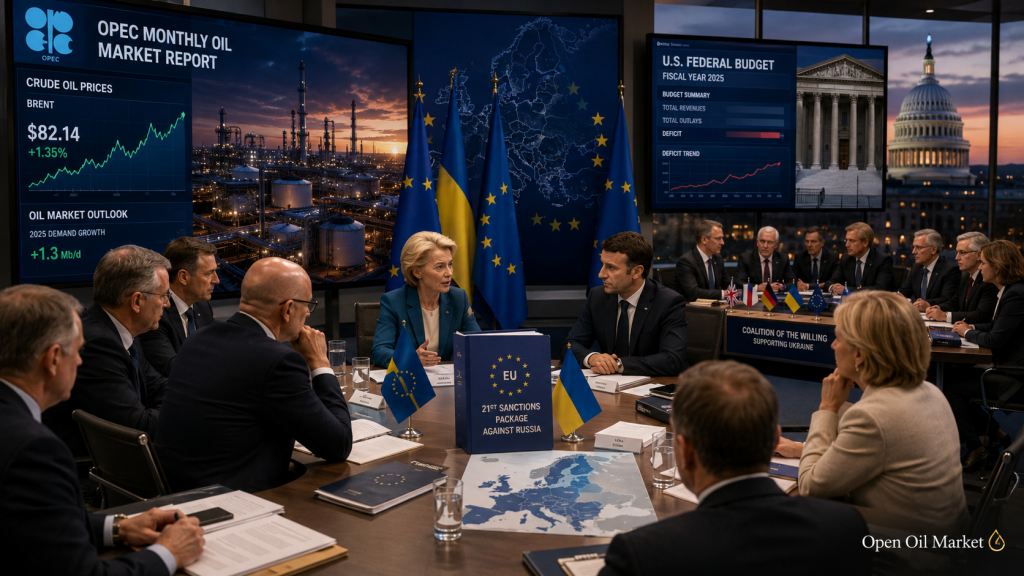
Economic Events and Corporate Reports for Monday, July 13, 2026: Possible 21st EU Sanctions Package Against Russia, Meeting on Ukraine, OPEC Report, US Federal Budget, and Large Public Company Earnings
The economic calendar for July 13 is shaped around four events that could set the tone for the markets for the entire week. For investors, these are not merely news items but triggers for reassessing risks in equities, bonds, commodities, and currencies.
Key Events on Monday
- EU and Russia: A consideration and possible adoption of the 21st EU sanctions package against Russia is expected.
- Ukraine: A meeting of the "coalition of the willing" on support for Ukraine is scheduled.
- Oil Market: The monthly OPEC report on the oil market is expected at 14:00 MSK.
- USA: The federal budget for June will be published at 21:00 MSK.
- Corporate Reports: Focus will be on Progressive, Fastenal, Kongsberg Gruppen, HCL Technologies, Grupo Aeroportuario del Pacífico, PrairieSky Royalty, FB Financial, WaFd, Vista Oil & Gas, and several mid-cap companies.
For global investors, this day is significant as it combines geopolitical risk, oil balance, and US debt sustainability. Such a combination can affect the dynamics of the dollar, yields on U.S. Treasuries, commodity prices, and demand for safe assets.
EU and the 21st Sanction Package Against Russia: Focus on Risks for Commodities, Logistics, and Capital
The anticipated adoption of the 21st EU sanctions package against Russia will be the central event for the CIS markets. Investors will assess the extent to which the new restrictions will impact export flows, financial settlements, logistics, the oil and gas sector, shipping, insurance, and equipment supplies. Even if the package turns out to be a compromise, the very fact of tightening sanctions maintains an elevated risk premium for Russian assets.
For the MOEX market, three directions are essential:
- Oil and Gas and Commodity Companies: Potential pressure on export chains, discounts to Urals, and transportation costs.
- Banking Sector: Risk of new restrictions on settlements, correspondent relationships, and cross-border payments.
- Industry and Import-Dependent Sectors: Impact on the supply of components, technologies, and equipment.
For CIS investors, this event is significant not only in the context of Russian stocks but also for assessing the currency market. Increased sanctions pressure typically heightens the ruble's sensitivity to oil prices, export revenues, and the fiscal rule.
Meeting of the "Coalition of the Willing" on Ukraine: Geopolitics Remain a Factor for Markets
The meeting of the “coalition of the willing” on Ukraine adds a second layer of geopolitical considerations to the agenda. Markets will be watching for possible statements on military, financial, and energy support for Ukraine, as well as coordination of sanctions pressure against Russia. For European investors, this relates to budget expenditures, the defense sector, energy security, and the political stability of the EU.
Sensitive asset groups include:
- Shares of European defense companies;
- Energy companies and infrastructure operators;
- Euro and European bonds;
- Russian exporters and firms reliant on external markets;
- Gold and other safe-haven assets.
If the rhetoric of the meeting turns out to be hard-lined, this could amplify demand for protective instruments. Conversely, if statements are moderate and expected, markets may quickly shift focus to oil, inflation, and corporate earnings.
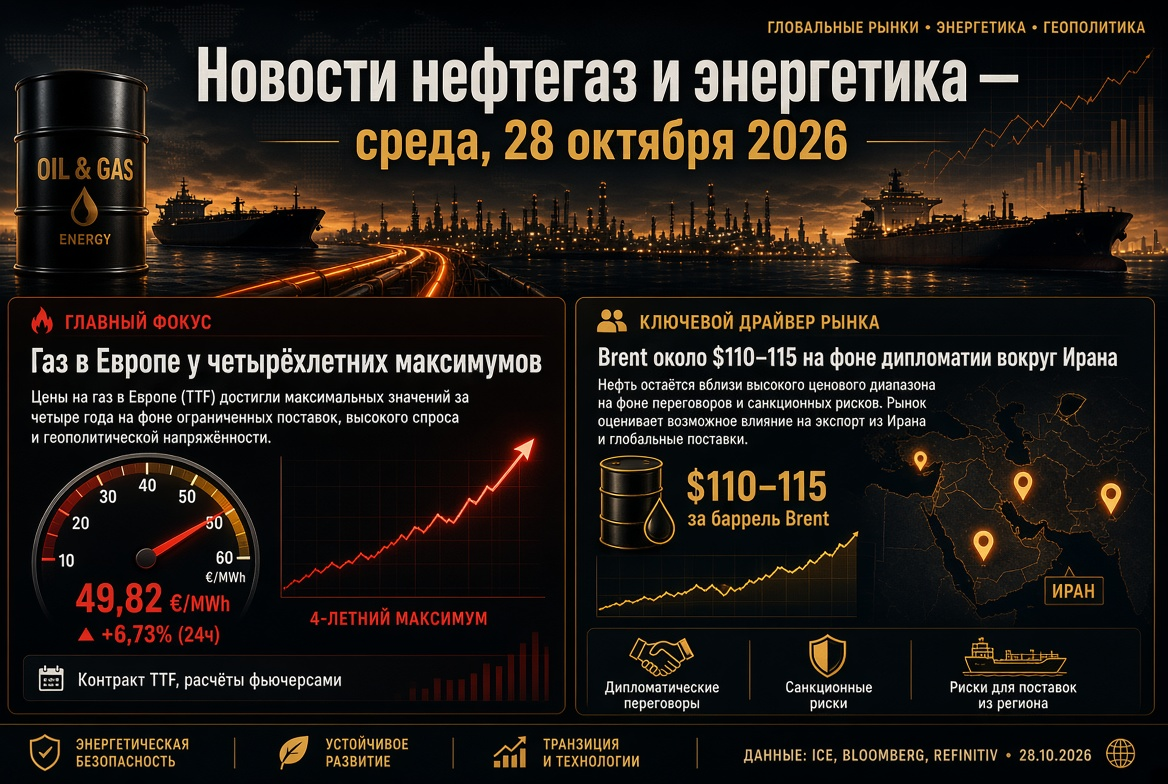
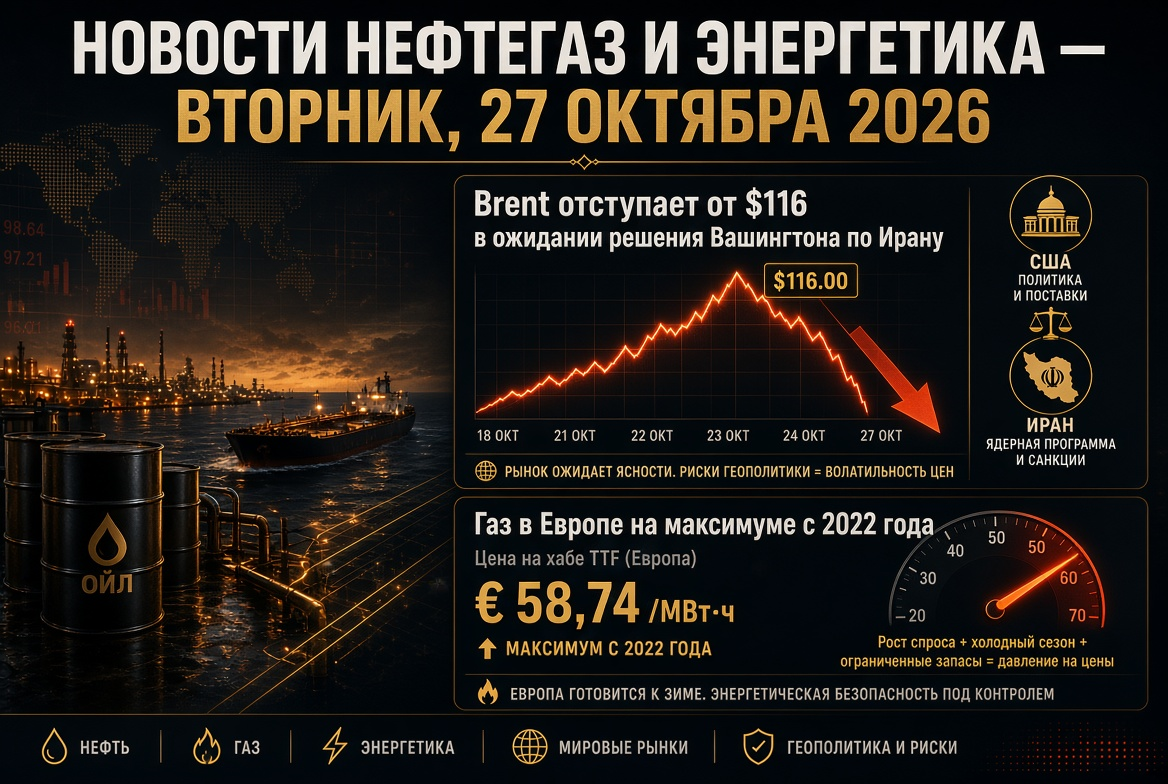
OPEC Report at 14:00 MSK: Key Indicator for Brent, WTI, and Urals
The monthly OPEC report on the oil market is one of the key events of the day for investors in the commodity sector. The document traditionally includes assessments of global oil demand, supply from OPEC and non-OPEC countries, commercial stocks, market balance, and factors influencing Brent and WTI prices.
Particular attention will be given to the following parameters:
- Oil Demand Forecast for 2026. Any upward revision could support Brent and oil and gas stocks.
- Assessments of Output from OPEC+ Countries. The market will be looking for signals about the discipline of deal participants.
- Oil and Petroleum Product Inventories. A reduction in inventories typically strengthens the bullish scenario for commodities.
- Demand from China, India, and the USA. These regions remain crucial for the global oil balance.
- Refining Margins. Important for companies dealing with gasoline, diesel, and aviation fuel.
For the Russian market, the OPEC report is important due to its impact on Urals dynamics, export revenues, budget income, and dividends of oil and gas companies. For global investors, it serves as an indicator of inflation risks, as oil directly affects fuel costs, logistics, and central bank rate expectations.
U.S. Federal Budget for June: A Signal for Debt, Dollar, and Yields
The U.S. will publish federal budget figures for June at 21:00 MSK. This figure reflects the difference between the federal government's revenues and expenditures. It is crucial for investors in the context of the U.S. debt burden, borrowing volume, Treasury yields, and dollar stability.
If the deficit is higher than expected, the market may price in a higher volume of future U.S. Treasury issuances. This could support yields, increase pressure on growth stocks, and raise volatility in the S&P 500 and Nasdaq technology sectors. If the deficit is moderate, investors may view this as a stabilizing factor for the debt market.
Impact of the U.S. Budget
- U.S. Dollar: Through expectations regarding borrowing and fiscal sustainability.
- Treasury Bonds: Through supply volume and term premium.
- Gold: Through real rates and confidence in dollar-denominated assets.
- Growth Stocks: Through cost of capital and discounting future cash flows.
- CIS Markets: Through global risk appetite, dollar liquidity, and commodity prices.
Corporate Reports in the U.S.: Progressive, Fastenal, and Second-Tier Financial Sector
The corporate earnings season in the U.S. is just ramping up, with the main block of large banks expected later in the week. Nevertheless, Monday already provides investors with several important signals. Among the most notable American companies on the calendar are Progressive, Fastenal, FB Financial, WaFd, Park Aerospace, Unity Bancorp, First Bancshares, Cryo-Cell International, FingerMotion, and Meritage Hospitality.
Progressive is important as an indicator of the insurance sector, consumer behavior, and claim costs. Investors will be looking at the combined ratio, dynamics of premiums, investment income, and the impact of inflation on losses.
Fastenal is one of the early indicators of industrial demand in the U.S. Its report is vital for assessing the state of manufacturing, construction, logistics, and corporate procurement. For the S&P 500 market, it serves as a signal of the health of the real economy, especially in the industrial and infrastructure segments.
FB Financial and WaFd are interesting as representatives of the regional banking sector. Investors will be tracking net interest margin, credit portfolio quality, deposit costs, and reserves for potential losses.
Europe and Asia: Kongsberg, HCL Technologies, Swatch, Bravida, and Other Companies
In Europe and Asia, the reporting on July 13 does not seem overloaded with mega-cap issuers from the Euro Stoxx 50 or Nikkei 225. However, there are several companies on the calendar that provide important industry signals.
Major and Notable Issuers Outside the U.S.
- Kongsberg Gruppen: Norwegian industrial and defense company, important for assessing European defense demand and marine technologies.
- Gjensidige Forsikring: Insurance sector in Northern Europe, sensitive to rates and investment income.
- HCL Technologies: Indian IT sector, an important indicator of global demand for digital services, outsourcing, and corporate technology.
- Swatch Group: Consumer demand, luxury segment, and export dynamics of Swiss companies.
- Bravida: Infrastructure, engineering services, and construction in Northern Europe.
- Grupo Aeroportuario del Pacífico: Passenger traffic, tourism, aviation infrastructure, and consumer activity in Latin America.
- PrairieSky Royalty: Energy, royalty business, and sensitivity to oil and gas prices.
- Thermador Groupe: French industrial sector and demand for engineering equipment.
For investors in the Euro Stoxx 50 and European markets, the day is important not so much for individual reports but for the overall backdrop: EU sanctions, Ukraine, oil, and defense spending. For the Nikkei 225, the main impact may come through oil, currency markets, global risk demand, and expectations regarding the technology sector in Asia.
Russian Market and MOEX: Sanction Risk Takes Precedence Over Local Reporting
For the Russian market, Monday will be defined less by corporate reports and more by foreign policy and oil. If the EU confirms a new sanctions package, investors will evaluate its impact on exporters, banks, logistics, oil refining, and technological imports. Simultaneously, the OPEC report may influence expectations regarding dividends of oil and gas companies and budget revenues.
The MOEX index will be sensitive to three factors:
- Sanction Rhetoric of the EU. The harsher the wording, the higher the risk premium.
- Brent Oil Price and Urals Discount. This is key to export revenues and the currency market.
- Global Dollar and U.S. Yields. They influence investors' attitudes towards emerging markets.
For CIS investors, it is important to note that Russian assets on such days often react not only to the fact of the news but also to details: personal restrictions, industry bans, logistical measures, financial constraints, and timelines for the sanctions to come into effect.
Points of Interest for Investors
Monday, July 13, 2026, could be a day of calibrating market expectations ahead of a busier week. Key data on U.S. inflation, large bank reports, and tech earnings are still to come, but today's events set the initial risk level.
Key Guidelines for Investors
- EU Sanctions Against Russia: Assess which industries and payment channels may come under pressure.
- Meeting on Ukraine: Monitor statements on military, financial, and energy support.
- OPEC Report: Check forecasts on demand, production, inventories, and market balance.
- U.S. Budget: Evaluate the impact of the deficit on Treasury yields and the dollar.
- Reports from Progressive and Fastenal: Use as early signals on insurance, industrial demand, and business margins.
- Reports from HCL Technologies, Kongsberg, Swatch, and PrairieSky Royalty: Watch for global IT demand, defense sector, consumption, and energy.
- MOEX, S&P 500, Euro Stoxx 50, and Nikkei 225: Compare reactions across different markets to oil, geopolitics, and dollar liquidity.
The baseline scenario for investors is to remain cautious until the details of the sanctions package, the OPEC report, and U.S. budget data are published. The focus should remain on the oil and gas sector, defense companies, banks, insurance, industrial stocks, gold, the dollar, and bonds. For a long-term portfolio, today is significant as an indicator of how geopolitics and commodity prices are once again becoming major drivers of the global investment environment.