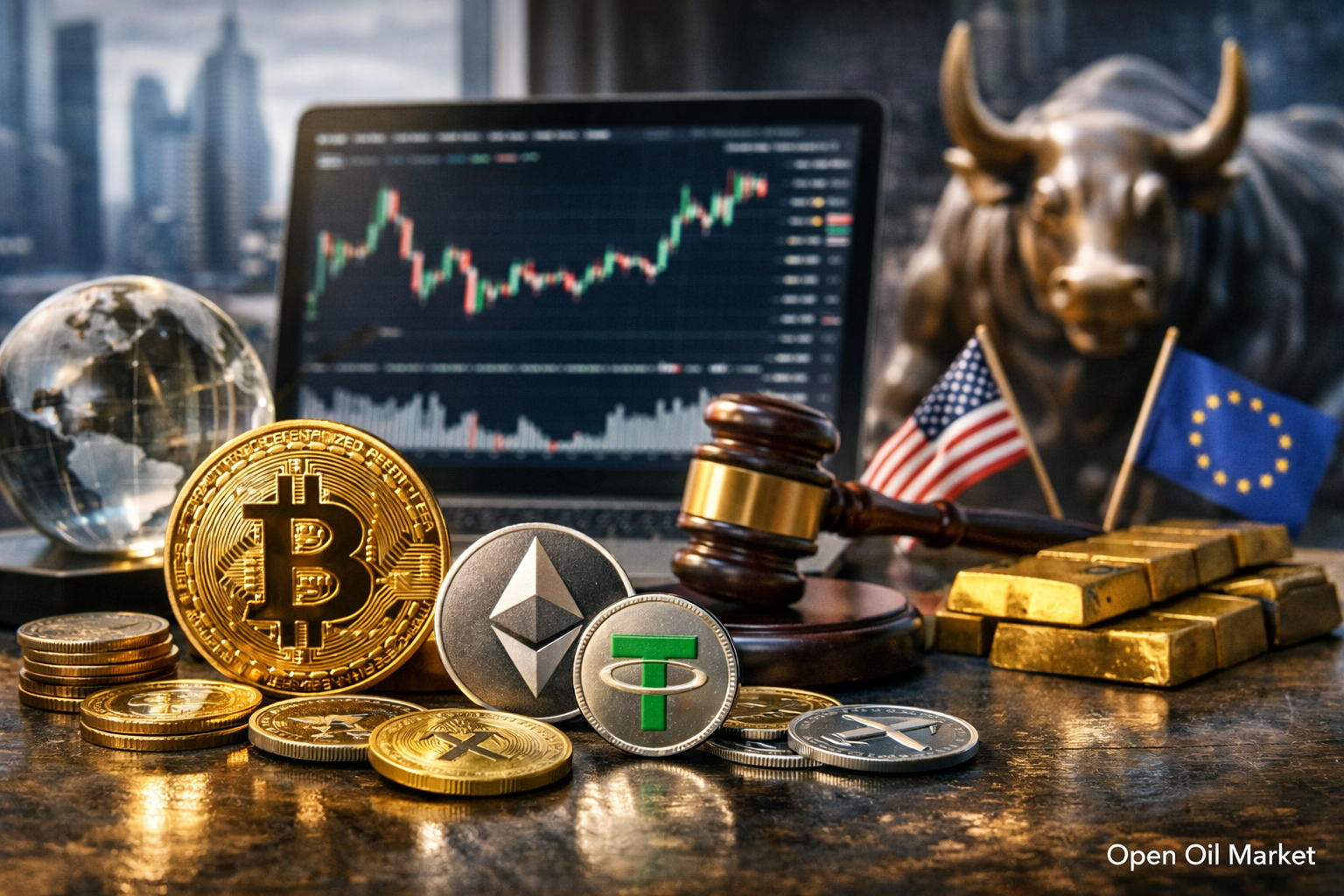
Current Cryptocurrency News as of March 23, 2026: Bitcoin and Ethereum Dynamics, Top-10 Cryptocurrencies, Regulatory Trends, Stablecoins, and Asset Tokenization. An Analysis for Investors
The cryptocurrency market is entering Monday, March 23, 2026, with increased selectiveness. Following strong movements in previous months, investors are increasingly evaluating not only price momentum but also the quality of demand, liquidity structure, regulatory prospects, and the level of institutional involvement. Therefore, the key theme at the start of the week is not merely the rise or correction of major digital assets but the market's transition into a phase of more mature idea selection.
The main benchmark for global investors is Bitcoin's resilience and the market's ability to maintain capitalization against the cautious macroeconomic policies of leading central banks. Concurrently, interest in infrastructure segments such as stablecoins, tokenization of real assets, exchange products, and digital payments is growing. All this makes the cryptocurrency market more complex yet more intriguing for long-term capital.
What is Happening in the Global Crypto Market Ahead of March 23
As the new week begins, the cryptocurrency market appears relatively composed, although volatility persists. Investors are considering several factors:
- a tough macroeconomic backdrop and the Federal Reserve's caution;
- slowing expectations for quick adoption of new crypto regulations in the U.S.;
- growing institutional interest in tokenization and digital payment infrastructure;
- the sustained strong position of Bitcoin within the market structure;
- shifts in attention from "speculative stories" to large, liquid crypto assets.
For investors, this signifies an important trend: cryptocurrencies are increasingly reacting not only to internal industry events but also to the global monetary cycle, regulation, and the movements of institutional capital. The market is becoming less chaotic and simultaneously more sensitive to the quality of news.
Bitcoin Remains the Key Barometer for Risk Appetite
Bitcoin continues to hold its status as the main benchmark for the entire cryptocurrency market. It sets the overall tone for assessing risk, liquidity, and the behavior of major investors. When Bitcoin maintains its leadership in market share, it usually signifies that capital prefers the most understandable and institutionally recognized digital asset.
Current conditions indicate that demand for Bitcoin remains relatively stable even amid cooling short-term optimism. This is a positive sign for the market for several reasons:
- Bitcoin remains the primary entry point for institutional investors into digital assets.
- It better reflects global risk appetite compared to other cryptocurrencies.
- A high proportion of Bitcoin in market capitalization reduces the likelihood of chaotic overheating in weaker assets.
For professional market participants, this means that Bitcoin's dynamics remain the principal indicator of whether the cryptocurrency market is ready for the next mid-term upward impulse or if it will remain in consolidation mode.
Ethereum and Major Altcoins: The Market Awaits Confirmation of Strength
Ethereum continues to serve as the second systemic asset in the industry; however, its behavior is currently being scrutinized by investors. While Bitcoin reflects the general faith in digital gold and institutional demand, Ethereum is perceived as a bet on activity within the blockchain economy: DeFi, tokenization, digital payments, and application development.
Major altcoins are also exhibiting uneven movements. Some investors favor liquid ecosystem assets that can benefit from increased real-world blockchain usage rather than just speculative hype. The current focus includes:
- Solana — as a high-throughput infrastructure story;
- XRP — as an asset closely tied to cross-border payments;
- BNB — as a bet on a major crypto exchange ecosystem;
- TRON — as one of the notable beneficiaries in stablecoin transactions;
- Dogecoin and Hyperliquid — as examples of the market still leaving room for high beta exposure.
This is an important signal for the global investment audience: cryptocurrencies have long ceased to function as a single asset class. Distinct segments are forming within the market, each with its own logic for valuation, risk, and potential return.
Regulation is Again in the Spotlight of the Crypto Market
One of the key themes for the cryptocurrency market on Monday is regulation. Market participants are closely monitoring how the positions of American and European regulators are evolving, as this plays a crucial role in determining the future scale of institutional demand.
The current picture appears ambiguous. On one hand, new signals have emerged in the U.S. regarding a more flexible approach to crypto assets and potential exceptions for startups. On the other hand, the progress towards a broader legislative framework is not happening as quickly as the market had hoped. This is dampening expectations for renewed momentum for ETFs, tokens, and cryptocurrency platforms.
For the cryptocurrency market, this means:
- regulatory clarity remains a powerful potential driver of growth;
- delays in rule adoption limit the speed at which new capital flows in;
- Bitcoin, Ethereum, and major infrastructure projects appear to be the most resilient in such an environment.
Asset Tokenization Strengthens the Investment Case for Blockchain
Another crucial topic for the global crypto market is the tokenization of real assets. Increasingly, major financial organizations are viewing blockchain not just as a medium for trading cryptocurrencies, but as a technological foundation for issuing, settling, and transacting traditional financial instruments.
Thus, news concerning tokenization today is as significant as price fluctuations in Bitcoin or Ethereum. For investors, this alters the very structure of the industry:
- the blockchain market is receiving fundamental, rather than solely speculative, demand;
- a bridge is emerging between traditional finance and digital assets;
- the importance of networks and projects associated with settlement infrastructure, value storage, and compliance with institutional requirements is increasing.
This also enhances the significance of those cryptocurrencies and blockchain platforms that can service large cash flows, corporate transactions, and the issuance of tokenized products.
Stablecoins Become One of the Main Themes of 2026
If Bitcoin remains the principal symbol of the crypto market, stablecoins are gradually becoming its most practical component. In the stablecoin segment, there is now a real demand from businesses, fintech, cross-border transfers, and payment infrastructure.
In 2026, this topic has notably strengthened in several areas:
- central banks and regulators are actively discussing rules for stablecoin circulation;
- major payment companies are increasing their interest in digital payments;
- the market increasingly regards stablecoins as a foundation for international liquidity;
- European and British regulators are scrutinizing systemic risks and impacts on the banking system more closely.
For the crypto market, this represents an important structural shift. Previously, many investors perceived stablecoins merely as a servicing element of trading; now they are becoming an independent direction in investment analysis. This is especially crucial for assessing Ethereum, TRON, and other networks through which a significant portion of settlement activity flows.
Top 10 Most Popular Cryptocurrencies as of March 23, 2026
For global investors, the largest and most liquid cryptocurrencies remain of utmost importance. At the start of the week, the following top-10 cryptocurrencies by market capitalization are in the spotlight:
- Bitcoin (BTC) — the main indicator of institutional demand and market sentiment.
- Ethereum (ETH) — the key asset in the smart contract, DeFi, and tokenization ecosystem.
- Tether (USDT) — the primary source of dollar liquidity within the crypto market.
- BNB — a systemic asset of the largest crypto exchange infrastructure.
- XRP — one of the most discussed assets in the context of payments and cross-border transfers.
- USDC — an important stablecoin for institutional and regulated use cases.
- Solana (SOL) — one of the leading candidates for further ecosystem expansions.
- TRON (TRX) — a notable player in the settlement infrastructure of stablecoins.
- Dogecoin (DOGE) — a high-risk yet widely recognized digital asset.
- Hyperliquid (HYPE) — a new notable participant in the upper market, reflecting interest in more specialized crypto platforms.
The mere presence of both classic leaders and new rapidly growing projects in the upper tier indicates that the cryptocurrency market embodies a blend of maturity and the search for new growth points.
What This Means for Investors at the Start of the Week
For investors, Monday, March 23, 2026, begins with a relatively clear logic. The cryptocurrency market is not in a phase of unquestionable euphoria; however, it maintains fundamental grounds for interest from capital. In this environment, the most prudent approach is usually built around three principles:
Focus on Quality
Cryptocurrencies with high liquidity, recognizability, and infrastructural significance take center stage.
Assessment of the Regulatory Background
Regulation remains the key to the next stage of institutional growth in the cryptocurrency market.
Understanding the Demand Structure
It is more critical to consider not just asset growth but what supports it: ETFs, stablecoins, tokenization, payment solutions, or speculative capital.
For the global investor, this means that the cryptocurrency market continues to offer opportunities but requires more meticulous filtering of ideas and greater attention to fundamental drivers.
Conclusion: The Cryptocurrency Market is Maturing, Making It More Demanding of Investors
As the new week begins, the cryptocurrency market finds itself at an interesting juncture. Bitcoin retains its role as the anchor asset, Ethereum remains the barometer of the digital economy, stablecoins enhance the infrastructural significance of the industry, and tokenization gradually integrates blockchain into the global financial system.
The main takeaway for March 23, 2026, is that cryptocurrencies are increasingly shedding their isolated logic and becoming more embedded in the international financial architecture. This is why cryptocurrency news today is significant not just for traders but also for institutional investors, asset managers, fintech companies, and participants in the global capital market.
If this trend continues, 2026 could become a period during which the cryptocurrency market fully transitions from a speculative perception to the status of a fully-fledged segment of international finance.