Current Cryptocurrency News as of February 26, 2026: Bitcoin and Ethereum Dynamics, Market Volatility, Regulatory Signals, and Top 10 Most Popular Cryptocurrencies for Global Investors
The cryptocurrency market is entering February 26 with heightened sensitivity to macroeconomic factors: a "risk-off" behavior predominates, where capital prefers quality and liquidity over risk and leverage. In such an environment, digital assets often exhibit "jumps": short impulses triggered by news are quickly followed by pullbacks, and local rallies in altcoins are not always supported by sustainable inflows. For investors, this means one simple thing: primary focus on risk management and discipline, with attempts to predict every candle coming secondary.
Macro Factors and Sentiment: Why the Market Responds to External Triggers
The main driver for the upcoming sessions is not a single coin, but the overall risk regime in global portfolios. When yields, dollar liquidity, and economic cycle expectations tighten conditions, crypto assets respond like a high-beta segment. An additional layer consists of information waves surrounding technological restructuring in labor markets due to AI: such narratives can sharply alter risk appetite across a wide range of assets, and crypto often serves as a "barometer" of sentiment.
- What’s important for investors: Monitor not only crypto news but also risk indices, liquidity dynamics, and the behavior of the tech sector.
- Practical takeaway: In a "risk-off" environment, strategies that allocate a higher percentage to highly liquid assets while reducing position sizes in volatile altcoins tend to perform better.
Bitcoin: Institutional Baseline Exists, but the Market Demands Catalysts
Bitcoin remains the main benchmark of the cryptocurrency market: it absorbs the largest flows, and its dynamics set the tone for altcoins. After periods of decline or sideways movement, investors typically seek "confirmation"—either through sustained inflows into instruments with institutional accessibility or through easing external risk conditions. In the current framework, the key question is: is there enough liquidity and confidence for demand to shift from episodic to systemic?
- Pro: High liquidity and a clear narrative of "digital reserve."
- Risk: Dependence on the overall risk regime and sharp movements due to news impulses.
- Strategy: Priority is scenario planning (risk levels, drawdown limits, holding horizon).
Ethereum: Betting on Infrastructure and Ecosystem Quality
Ethereum remains a key infrastructure for DeFi, tokenization, stablecoins, and numerous practical scenarios. However, this "infrastructure" status makes ETH sensitive to two factors: activity in applications (transaction fees, network load, demand for blockchain services) and capital rotation within the crypto market. During cautious periods, investors tend to prefer larger platforms, while in "risk-on" phases, they lean towards riskier assets and more aggressive betas.
- What to watch: Stablecoin activity, interest in DeFi, dynamics of L2 ecosystems, behavior of major holders.
- How to read the market: ETH's resilience relative to the broader market often indicates a shift in investor focus towards "quality" within crypto.
Altcoins: Rotation, "Themes of the Day," and Risk of Liquidity Gaps
In the altcoin segment, rotation comes to the forefront: capital moves between "narratives" (L1 platforms, meme segment, infrastructure, DeFi, RWA, etc.) faster than stable trends can form. This creates a typical picture: wide green candles in some coins with weak breadth across the market as a whole. In such moments, it is especially important to distinguish between impulse and trend.
- Short-term impulses are often fueled by derivatives and retail demand.
- Sustained movements require confirmation through inflows and increases in real usage.
- Risk: "Thin liquidity" in medium coins and sharp gaps when sentiment shifts.
Stablecoins and Regulation: The Market Matures, and Requirements Tighten
Stablecoins are increasingly viewed as payment and settlement infrastructure for the crypto-economy, thus becoming a subject of close scrutiny. The global regulatory trend is similar: tightening requirements for reserves, transparency, redemption rights, and oversight of issuers. For the market, this presents a dual factor: on one hand, it increases trust and "legitimacy" of stablecoins; on the other, it raises compliance costs and alters the competitive landscape for issuers and platforms.
- Positive: Establishing rules of the game facilitates the entry of institutional players.
- Risk: Individual tokens and business models may come under pressure due to reserve and disclosure requirements.
- Investor focus: Preference for the most transparent and liquid stablecoins and the infrastructure surrounding them.
Security and Incidents: Why "Cyber-Premium" is Again in Demand
The issue of security remains systemic: major hacks and exploits not only cause direct damage but also dampen overall sentiment, raising the required risk premium for DeFi and new protocols. In this context, the market usually strengthens quality filters: the value of audits, insurance mechanisms, mature storage standards, and operational discipline among exchanges and custodians increases. For investors, it is more crucial to consider not the "loudness" of headlines, but the conclusion: counterparty and smart contract risks are part of expected returns, not rare exceptions.
- Portfolio hygiene: Segregation of trading and investment wallets, limits on counterparties.
- Protocol selection: Priority for mature products with a track record and transparent architecture.
- Risk triggers: Sharp spikes in yields, "too good" conditions, and aggressive incentives should prompt increased caution.
Top 10 Most Popular Cryptocurrencies: The Core of the Market by Capitalization
The "core" of the crypto market—its largest assets by capitalization and liquidity—remains in focus for global investors. This does not guarantee returns, but this zone features lower spreads, more mature infrastructure, and typically a reduced risk of sudden "liquidity droughts" compared to the long tail of altcoins.
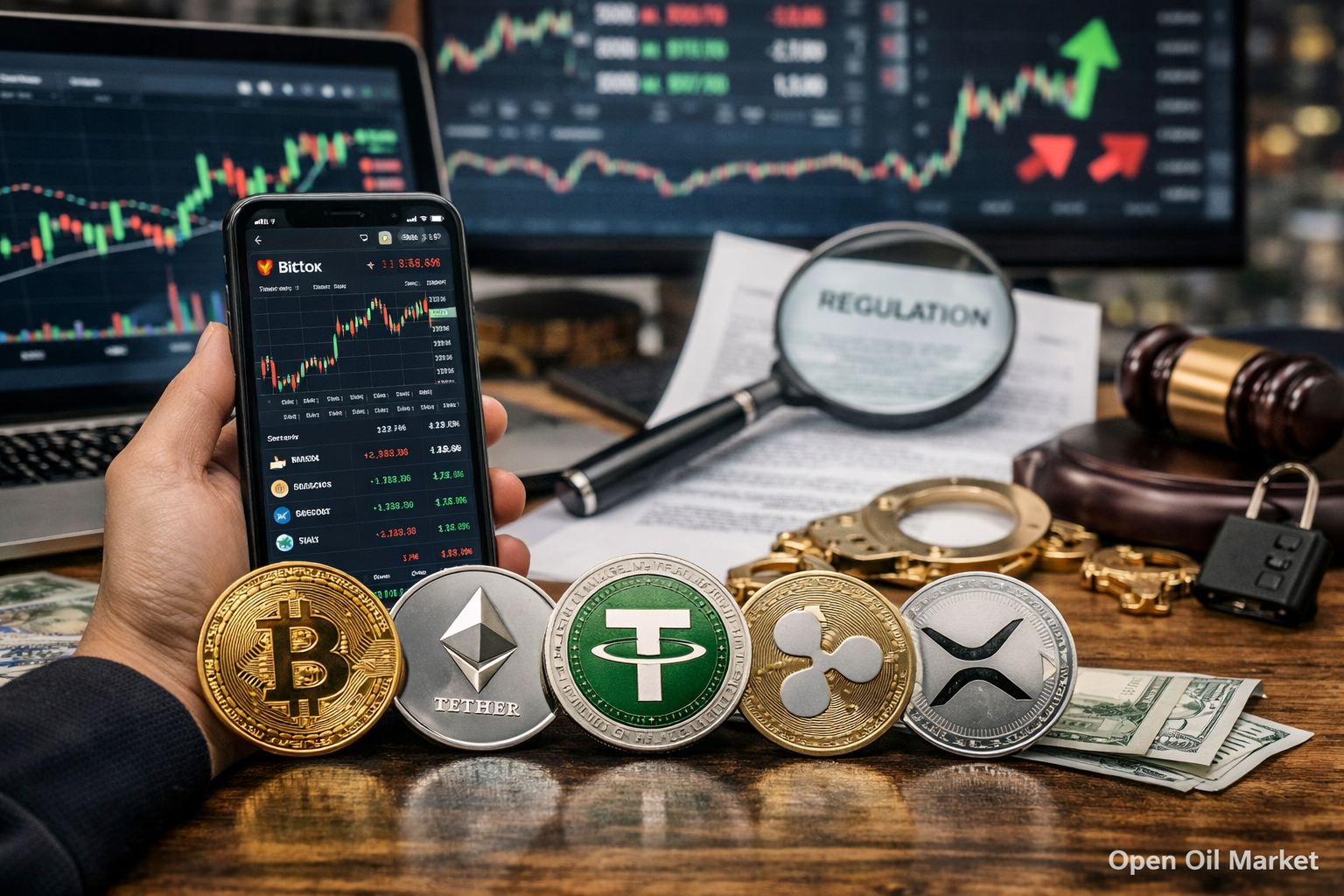
- Bitcoin (BTC) — the foundational asset of the market, the main sentiment indicator.
- Ethereum (ETH) — the infrastructure layer for applications, DeFi, and tokenization.
- Tether (USDT) — the largest stablecoin for transactions and liquidity.
- XRP (XRP) — a liquid asset with strong sensitivity to news.
- BNB (BNB) — an ecosystem asset linked to infrastructure and user activity.
- USD Coin (USDC) — a stablecoin significant for institutional infrastructure and transactions.
- Solana (SOL) — a high-performance L1 ecosystem with an active user base.
- TRON (TRX) — a network widely used for transfers and stablecoin operations.
- Dogecoin (DOGE) — the largest representative of the "meme segment" with stable liquidity.
- Bitcoin Cash (BCH) — a liquid asset with periodic surges in interest.
What Investors Should Do Tomorrow: Scenarios, Risk Management, and Priorities
Over the horizon of one day, the key task is not to "catch the maximum," but to maintain portfolio control amidst volatility. A rational approach is to pre-determine scenarios and actions for each.
- Base scenario (sideways movement): Focus on discipline, rebalancing, gradual increase/decrease of risk in small steps.
- Risk scenario (deepening decline): Margin control, reduction of leverage, decreasing the proportion of low-liquid assets.
- Positive scenario (growth impulse): Partial fixation on sharp movements, avoiding "chasing" purchases.
Key takeaway: In the current regime, strategies with clear entry/exit rules and pre-defined risk levels tend to outperform — especially for a global audience where trading sessions are not tied to any single time zone.