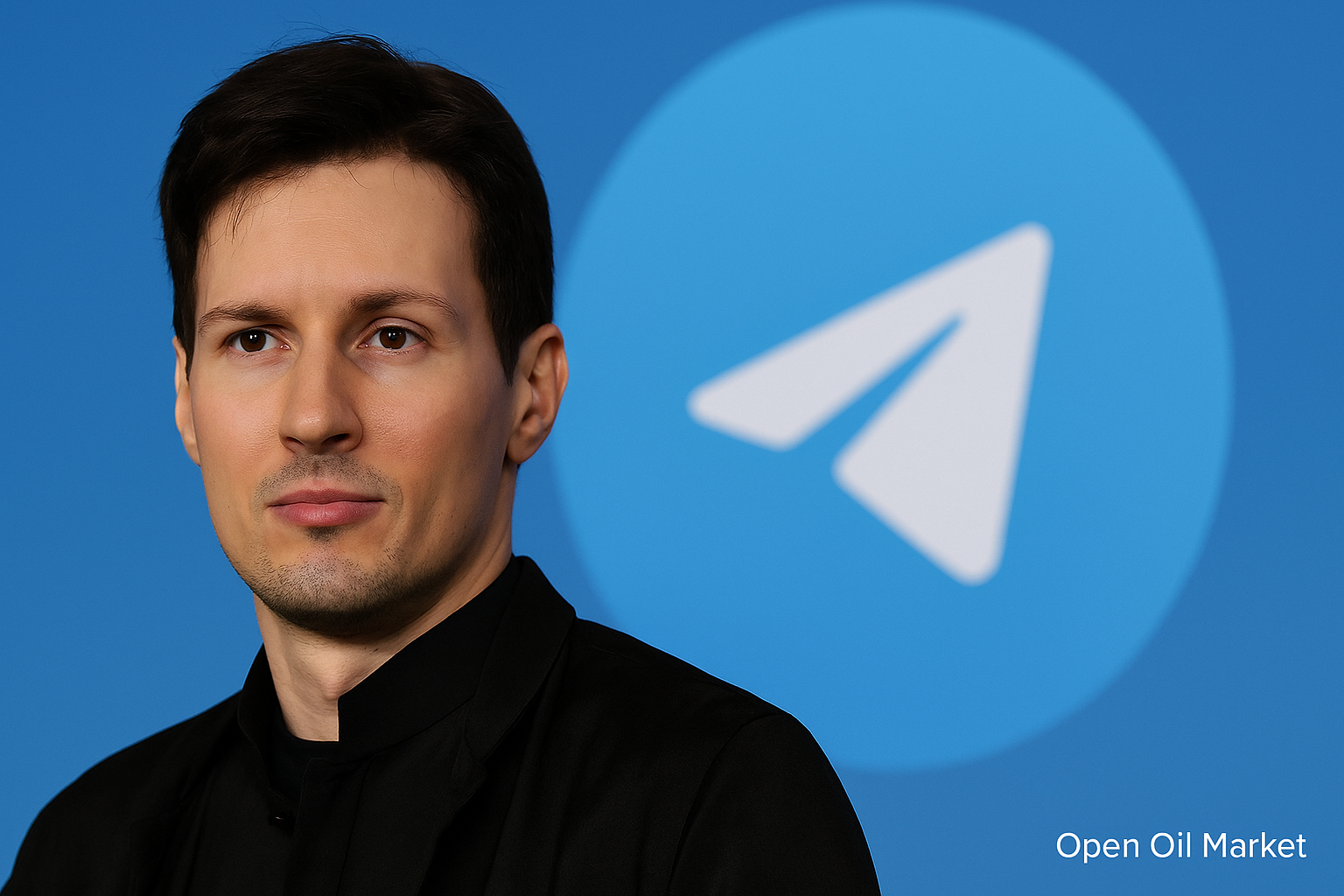
Analysis of the Telegram Phenomenon Valued at $30 Billion with a Workforce of Only 30 Employees: A Review of its Business Model, Efficiency, Monetization, and Investment Attractiveness
The messaging platform Telegram is currently valued at approximately $30 billion. Yet, running a service with a global audience of around 1 billion users is managed by a team of just 30 employees, all working remotely without a single office. This phenomenon captivates investors worldwide and highlights that in today's tech industry, a company's value is determined not by the size of its workforce or the existence of a headquarters, but rather by the scale of its audience, the effectiveness of its business model, and the potential for monetization.
$30 Billion Valuation with a 30-Employee Team
The Telegram case challenges conventional beliefs about how many people are necessary to build a company worth tens of billions of dollars. In contrast, most tech companies with a market capitalization around $30 billion typically employ thousands of staff and have a robust management structure. However, Telegram has achieved a similar market valuation relying on an exceedingly small workforce. This precedent is not unprecedented within the industry; for instance, the messenger WhatsApp had about 50 employees when it was acquired by Facebook in 2014 for $19 billion. Nevertheless, the Telegram example is unique as the company, remaining independent and not absorbed by a tech giant, has reached an astronomical valuation with minimal team expansion.
Remote Work Model without an Office
One of the reasons Telegram has been able to effectively manage its service with such a small team is its fully remote work model. The company has no physical headquarters: employees are distributed across various countries and work from home or other convenient locations. This approach minimizes overhead costs associated with maintaining offices and infrastructure. Formally, Telegram's headquarters is located in Dubai; however, daily operations are decentralized. A globally distributed team allows for the recruitment of top talent regardless of location, which is especially valuable in an era where remote work has become the norm. Moreover, the absence of office ties provides flexibility and accelerates problem resolution; employees can engage online promptly without geographical or bureaucratic barriers.
Automation and Flat Management Structure
Telegram compensates for its small team size by maximizing technology use. Many routine processes are automated: content moderation, spam control, and user support are partially handled by bots and algorithms. Cloud architecture and proprietary data transfer protocols enable the company to service increasing loads without exponential growth in IT staff. The organizational structure is extremely flat: cumbersome hierarchies and multilayered management are absent. Founder Pavel Durov personally oversees product development and interacts directly with developers, eliminating intermediate links in decision-making. Notably, the company lacks a traditional HR department; talent acquisition is conducted through specialized programming contests and proprietary tests, allowing for the identification of highly qualified independent specialists. This minimalist management approach speeds up the release of new features and enhances operational efficiency: fewer approvals mean faster implementation of innovations.
Privacy and Independence as a Strategic Foundation
Telegram's philosophy since its inception in 2013 has been built around the ideas of independence and privacy. Pavel Durov created the messenger after leaving VKontakte, aiming to provide the world with a communication tool free from censorship and total control. The service initially ensured end-to-end encryption in secret chats and declined to sell user data, attracting an audience, particularly in regions with harsh internet censorship. Telegram's reputation as an independent platform, not subject to governments or large corporations, has become one of the key drivers of its growth. In its early years, the company avoided external investors and advertising, relying on Durov's personal funds to maintain full control over the product and adhere to its chosen mission. This independence has strengthened user trust and allowed the company to focus on long-term development rather than instant profit.
Explosive User Growth and Global Reach
Over the past years, Telegram has demonstrated rapid growth in its user base. In 2018, the service had about 200 million users, but by early 2021, it reached 500 million, and in 2022-2023, it surpassed 700-800 million. In 2023, against the backdrop of global trends in data security and disruptions among competitors, Telegram's user numbers surged, and as of 2025, its monthly audience exceeded 1 billion active users. Today, it is one of the most popular messaging apps globally: according to Durov, Telegram has become the second largest globally after WhatsApp (excluding the closed Chinese market WeChat). The reasons for its popularity include a focus on convenience and security, as well as the functional flexibility of the platform: in addition to chats, Telegram offers channels for mass broadcasting, groups for communities, and bot services, which enhance its value for various user categories.
Monetization: Premium Subscriptions, Advertising, and Cryptocurrency
For almost the first decade of its existence, Telegram operated without any revenue: the app remained free and contained no advertising, with operational costs financed by Durov's capital. However, with the growing audience and expenses, it became evident that a sustainable business model was necessary. In 2021, Telegram attracted significant external funding for the first time, issuing five-year bonds exceeding $1 billion and effectively beginning its monetization journey. In 2022, the company launched Telegram Premium—a voluntary paid subscription that grants users access to extended features:
- increasing the maximum file upload size to 4 GB;
- exclusive stickers and new reactions;
- disabling official advertising in the app;
- a range of other additional features.
Meanwhile, the basic functionalities of the messenger remain free. Simultaneously, Telegram has begun cautiously introducing advertising: sponsored messages have appeared in large public channels, providing the messenger with a revenue source without aggressively intruding on private chats. Additionally, the company is experimenting with blockchain technology—such as auctions for unique usernames and the integration of a cryptocurrency wallet—searching for new sources of revenue. These initiatives have quickly impacted finances; according to industry sources, by 2024, Telegram reached operational profitability for the first time, and annual revenue exceeded $1 billion. The platform continues to adhere to principles of privacy and a rejection of intrusive advertising, striving to maintain a balance between monetization and audience interests.
Why Investors Valuate Telegram So Highly
Telegram's $30 billion valuation reflects investors' expectations regarding the company's future potential. In venture capital, such high valuations of startups with relatively modest current revenues are not uncommon—the markets primarily focus on audience size and loyalty, as well as monetization prospects. A billion users actively using the platform is an invaluable strategic asset. If Telegram can convert even a small portion of this audience into paid services or ad views, the company's revenues could measure in the billions annually, justifying its current valuation. Similar precedents have existed before: the price per user in the WhatsApp acquisition was approximately $40, and for Telegram, the market valuation is roughly equivalent to $30-35 per user—a comparable figure. In addition to pure numbers, investors are attracted by Telegram's unique market position: it is one of the few major independent messengers not owned by IT giants. A strong brand, reputation in privacy, and Durov's personal contributions to product development enhance trust in the company. In 2025, Telegram successfully issued the latest tranche of convertible bonds worth $1.7 billion, maturing in five years—this move essentially lays the groundwork for a future stock market entry and demonstrates institutional investors' belief in the company's long-term growth.
Future Prospects: IPO and Continued Growth
Ahead of Telegram lies a phase of monetization scaling and a potential public market entry. Pavel Durov has not ruled out conducting an IPO when the company solidifies its financial metrics and avoids regulatory risks. It is anticipated that the stock placement could value Telegram even higher, especially if the user base and revenue continue to grow. In preparation for public status, the company will likely need to expand its workforce—in particular, hiring experts in compliance, regulatory affairs, and support for new services. However, investors will need to assess whether Telegram can maintain its unique efficient model and retain audience loyalty as it becomes a publicly traded company. Nevertheless, Telegram's experience has already altered perceptions of what successful tech businesses may look like: it has proven that a focus on product, global reach, and a frugal approach to resources can create a world-class company of significant interest to the largest investors in a relatively short timeframe.