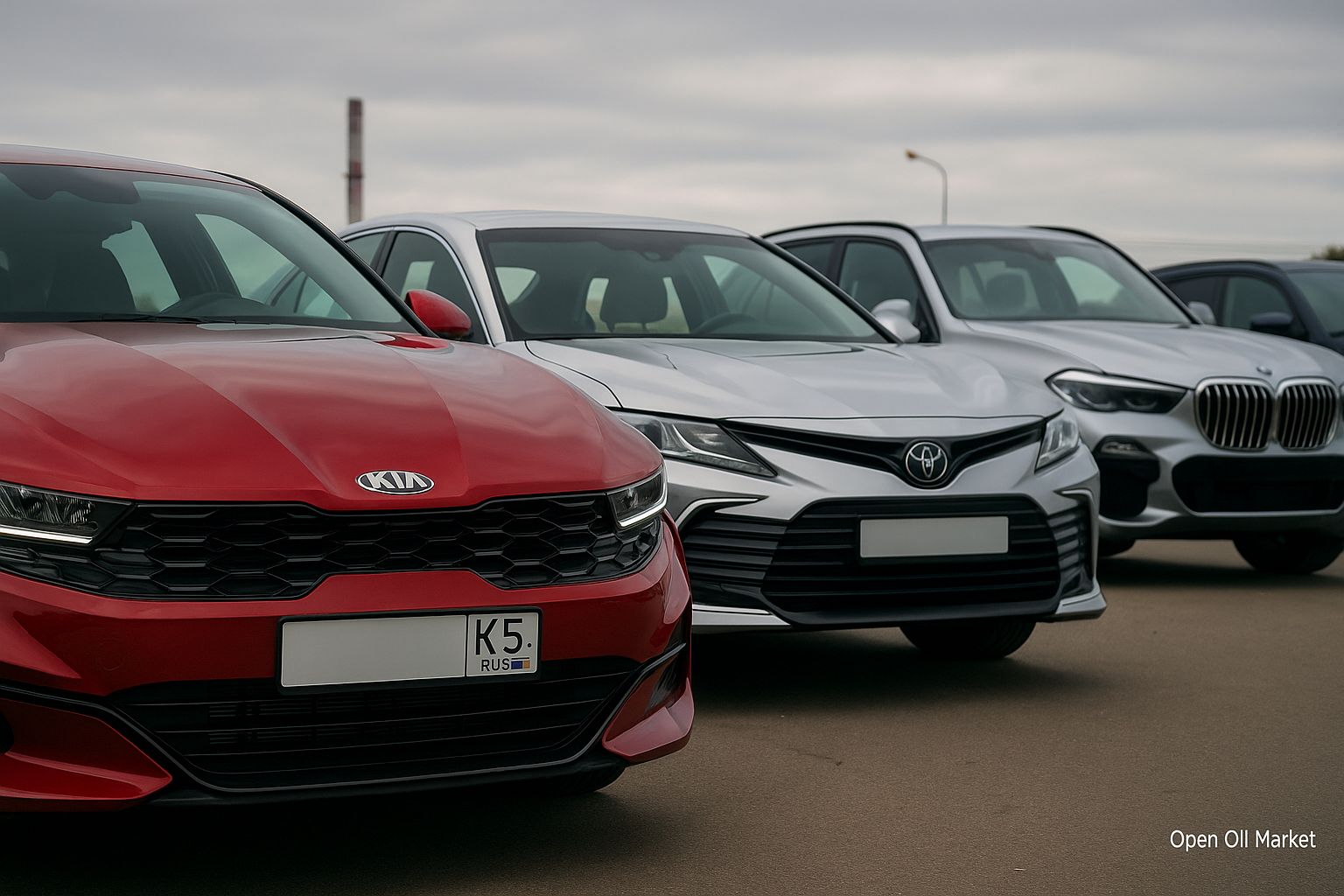
A New Recycling Fee Has Come into Effect in Russia, Significantly Increasing the Cost of Foreign Cars Over 160 HP: An Analysis of Changes, Impact on Buyers, and Price Forecasts Until 2030
As of December 1, 2025, a revised formula for calculating the recycling fee on imported passenger vehicles has entered into force. The new rules introduce coefficients that depend not only on engine displacement but also on output power, applied to a base rate of 20,000 rubles. This means that automobiles with an output exceeding 160 HP will now be subject to commercial rates, with fees increasing to hundreds of thousands or even millions of rubles, as opposed to a few thousand under the previous regime.
However, for vehicles with engines up to 160 HP, the preferential recycling fee remains intact—government estimates suggest that around 80% of the vehicle fleet falls into this category. Such vehicles are subject to the former low rate (3,400 rubles for new models and 5,200 rubles for those older than three years). Nonetheless, the combination of the new recycling fee and existing customs duties leads to a sharp increase in the overall cost of importing foreign cars.
Who Will See Price Increases for Foreign Cars and By How Much?
The new regulations will particularly impact popular mid-range and premium vehicles with engines exceeding 160 HP in Russia. For example:
- Toyota Camry 3.5: additional recycling fee of around 2.9 million rubles (almost equal to the cost of the vehicle itself).
- Kia K5: approximately 795,000 rubles additional.
- BMW M5: around 4.0 million rubles additional.
- Lixiang L9: recycling fee increased from 3,400 rubles to nearly 2.0 million rubles.
These examples illustrate the scale of the price increases: the final purchase price of foreign cars, including the new fee, will be significantly higher than before.
Surge in Demand Before the Increase
Anticipation of drastic price hikes has led to a surge in the market even before the formal implementation of the changes. In October 2025, about 12% of all passenger vehicle sales were attributed to "grey" imports (nearly 19,700 cars), as buyers rushed to import vehicles under the old rules. Customs in the Far East shifted to round-the-clock operations to process as many vehicles as possible before December 1.
Concurrently, new passenger car sales reached a record 171,200 units in October, the highest in the last 3.5 years. Without previous discounts and promotions, the average purchase price increased by approximately 20% over three months. This confirms a high short-term demand and a readiness among consumers to make purchases before the significant changes in market conditions.
The Government's Goals: Protecting the Automotive Industry and Budget Revenue
In official statements, the new recycling fee is presented as a tool for supporting the domestic automotive industry. According to First Deputy Prime Minister Denis Manturov, the new scheme aims to make local car production in Russia more economically viable than imports. The Minister of Industry and Trade, Anton Alikhanov, noted that vehicles under 160 HP represent about 80% of the fleet, thus most private buyers are "not affected" by the new rules. President Putin has also spoken about the necessity of the recycling fee to support local manufacturers.
However, due to the reduced influx of foreign cars, the budget may face significant revenue shortfalls. Experts estimate that annual losses in revenue could reach up to 300 billion rubles (for comparison, in 2024, the recycling fee generated about 1.1 trillion rubles for the federal budget, of which over 600 billion rubles came from imports).
Consequences for Buyers and the Market
The increase in the recycling fee will instantly raise the "barrier to entry" for the used foreign car market, rendering many models unobtainable for private individuals. Average buyers will face a substantial increase in vehicle costs, as the recycling fee will constitute a significant portion of the final price. This will lead to a decrease in demand for foreign cars with medium and high power outputs and push car owners toward more affordable vehicles with engines up to 160 HP or domestic equivalents.
Overall, this indicates a major restructuring of the market: foreign brands are likely to lose ground, while domestic production may gain an additional impetus. According to estimates from the Ministry of Industry and Trade, passenger car sales could decline by 13-16% in 2025 (to 1.3-1.35 million units), reflecting consumer reactions to rising prices and changing tax burdens.
Further Developments: The Recycling Fee Through 2030
Increases in the recycling fee will not stop here. Rates will rise by another 25% starting January 1, 2026, followed by annual indexing of 10-20% until 2030. Experts estimate that if this trajectory persists, by the end of the decade, the fee for the most powerful foreign cars could surpass 10 million rubles, rendering their import economically unfeasible.
- From January 1, 2026, recycling fee rates will increase by 25%.
- Annual indexing of 10-20% in 2027-2030.
- By 2030, the recycling fee for cars over 493 HP will exceed 10 million rubles.
Conclusion
The new rules for calculating the recycling fee have radically changed the conditions for importing foreign cars into Russia. Now, the price of an imported vehicle depends not only on displacement but also on engine power, leading to a swift rise in prices for many models. In the short term, this will limit access to expensive foreign cars and increase demand for more affordable alternatives, while in the long term, it will reinforce the advantages for domestic manufacturers and reduce the presence of powerful foreign cars in the market.
For investors, these changes signal a restructuring of the automotive market in Russia and the CIS. Foreign brands will lose some market share, while investments in local assembly operations may become more attractive. At the same time, the overall volume of car sales could decline: owning a powerful foreign car may become a one-time luxury due to the increased tax burden and import restrictions.